
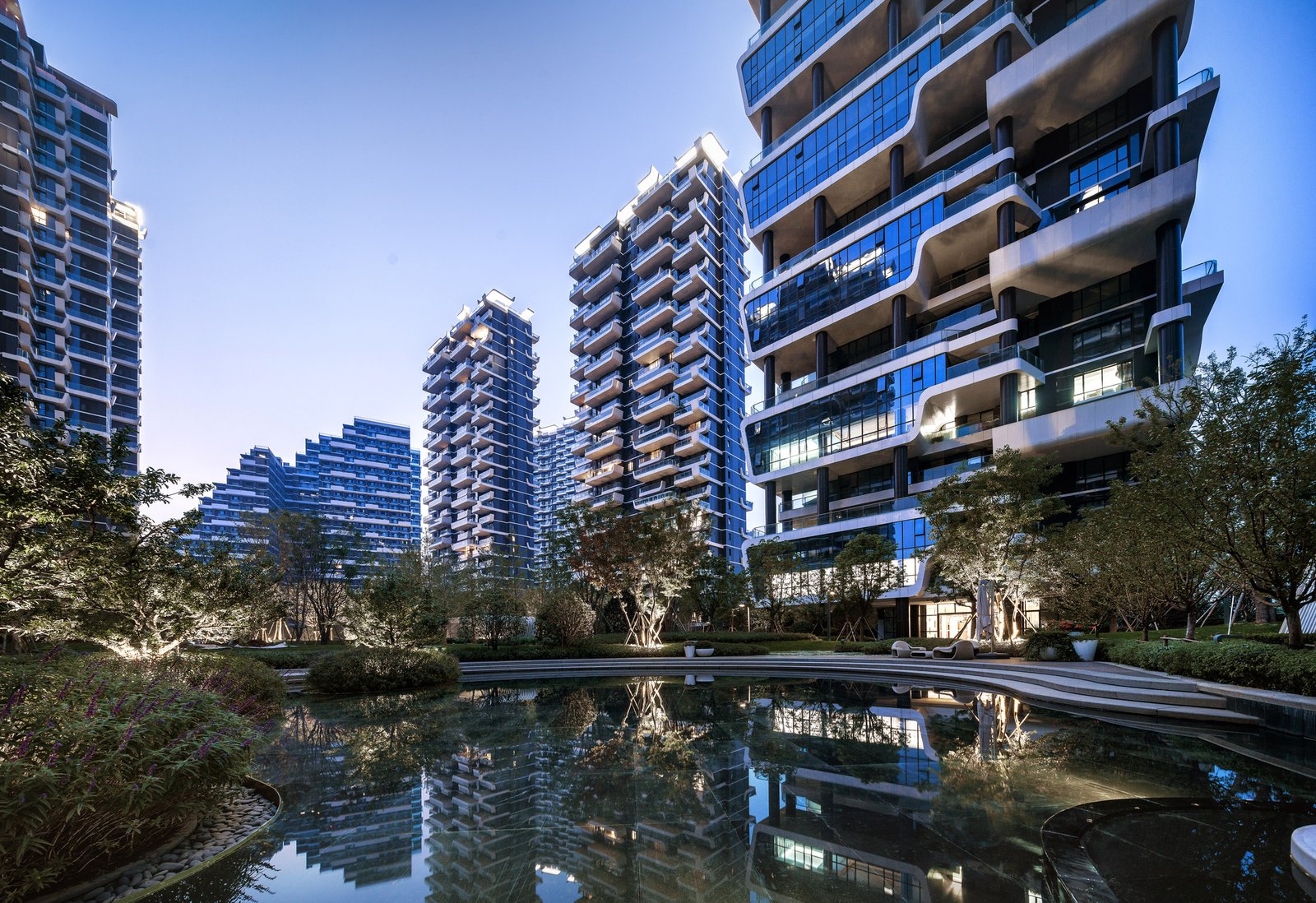
Forget the sprawling hedge fund mansion for a moment. The definition of opulence has shifted skyward. Today, a luxury condominium represents something often more elusive than square footage: time. In our current era of global uncertainty and constant connectivity, the ability to close a door, travel for three months, and return to a perfectly maintained, secure, and staffed home is the ultimate flex. That is the core promise of the modern high-end condo market .
We are looking at a market that has bifurcated entirely from the traditional housing sector. While suburban tracts might feel the pinch of interest rates, the penthouse and boutique condo markets are operating in a different economic stratosphere. High-net-worth buyers are moving decisively, driven by a desire for efficiency, curated amenities, and specific lifestyle infrastructure—like cold plunges and pet spas—rather than just the number of bedrooms. This article unpacks everything you need to know, from the hottest global trends to the nitty-gritty of reading a condo association’s reserve report.
The New Market Dynamics: A Tale of Two Realities
We have to start by acknowledging the elephant in the room: the economic split. According to the 2026 Global Luxury Outlook, luxury real estate is decoupling from the general housing market. The affluent are less sensitive to rate hikes because they are playing a different game. They are moving wealth, consolidating assets, and seeking stability . In cities like New York and Miami, we are seeing a “flight to quality.” It’s not that people don’t want to buy; it’s that they refuse to buy average inventory.
For the luxury condominium buyer, this means opportunity with a side of caution. In South Florida, for instance, there is an oversupply of generic condos, giving buyers leverage to negotiate. However, at the very top—the oceanfront branded tower or the boutique building with the award-winning architect—scarcity still rules. You can haggle over a standard unit, but you will pay a premium for something irreplaceable. The key takeaway for 2026 is that “luxury” is no longer a price point; it is a measure of how well the asset protects you from volatility .
Why Branded Residences Dominate the Conversation
Let’s talk about the elephant in the living room: the logo. Walk through Miami, New York, or even Kuala Lumpur, and you cannot miss the proliferation of flags flying outside residential towers. We are talking about Dolce & Gabbana, Bentley, Porsche, and Armani putting their names on buildings . It is easy to be cynical and call it a marketing gimmick, but the data suggests these branded luxury condominium units hold their value better during downturns.
Why? It comes down to a reduction of risk. If you are buying a unit in a St. Regis or a Four Seasons residence, you aren’t just buying walls and a floor; you are buying into a known service standard. You know the concierge will be excellent. You know the maintenance will be pristine. For the global citizen who splits time between Singapore and New York, that predictability is worth a premium. A branded luxury condominium offers a shortcut through the due diligence jungle; you aren’t guessing about the management quality because the brand’s reputation is on the line .
Amenities as Infrastructure: The Wellness Mandate
Gone are the days when a pool and a sad, windowless gym were enough. Today’s discerning buyer treats their building like a five-star resort. We are seeing the rise of “wellness as infrastructure.” If a building doesn’t have a cold plunge, a infrared sauna, or a dedicated yoga studio with operable walls, it is already behind the curve .
But it goes deeper than sweat. Post-pandemic, the lines between working, living, and relaxing have blurred. Buyers now expect private co-working lounges, Zoom-ready nooks, and screening rooms. If you look at new developments like Habitat Residences in Los Angeles, the focus is on “hospitality-inspired” living—think chef demonstrations, wine tastings, and pet-friendly open spaces that function as an extension of your living room . When you invest in a luxury condominium today, you are buying an ecosystem, not just an apartment.
The Great Debate: Condo vs. Single-Family Home
Wealthy buyers are currently asking a very specific question: Should I trade the estate for the tower? The answer depends entirely on your tolerance for “stuff.” A single-family home gives you autonomy—you want to paint the door neon green? Go for it. But that autonomy comes with the burden of managing contractors, landscaping, and security .
The pendulum is swinging back toward the luxury condominium for one specific reason: the “lock-and-leave” lifestyle. High-net-worth individuals are mobile. If you own a mansion in the suburbs, leaving for a month requires a small army of house sitters and landscapers. In a full-service condo, you lock the door, and the front desk handles the rest. In cities like New York, where homeownership is becoming out of reach for many, the rental market for luxury units is also booming, showing that even renters want access to this frictionless lifestyle .
Navigating the Financials: HOA Fees and Special Assessments
Let’s get real about the math. Buying a luxury condominium is often the easier part; the monthly carrying costs are where the discipline comes in. High HOA fees are common—they cover the doorman, the pool heating, the elevator maintenance, and the insurance. But in 2026, due to new legislation (especially in markets like Florida post-Surfside), we are seeing a massive crackdown on reserve funding.
Buyers must become forensic accountants. You need to look at the association’s reserve study. Are they fully funded? If not, a special assessment could land on your lap six months after moving in. A “cheap” purchase price is an illusion if the building hasn’t maintained its concrete or roof. Smart buyers are underwriting the building’s financial health before they fall in love with the view .
A Closer Look at Global Hotspots
Location still reigns supreme, but the “where” is shifting slightly.
Miami & South Florida: The king of the branded residence. Here, inventory is high, but true waterfront is finite. Buyers are looking at “next-gen” towers that offer vehicle elevators (park your car next to your living room) and heavy-hitting architecture. Negotiation is possible, but only on the commodity units .
New York City: The market has reset. It is no longer about speculation but “enduring architectural value.” The condos moving here are the ones with serious design pedigree—think Robert A.M. Stern or Jean Nouvel. The city is not oversupplied with great housing; it is oversupplied with average housing .
Asia (Kuala Lumpur): The concept of the “tropical luxury condominium” is taking off. Projects like The Cedar emphasize biophilic design—bringing the forest into the high-rise. Here, the value is in low-density living (only 70 units on acres of land) and privacy, proving that luxury isn’t just about height, but about space per square foot .
The Psychology of Design: Why We Can’t Escape Beige
If you have scrolled through Zillow lately, you might have noticed that everything looks the same. White walls, light oak floors, neutral sofas. There is a reason for that, and it isn’t a lack of creativity. It is the algorithm. Real estate agents have learned that “50 shades of beige” sells faster because it photographs well and appeals to the lowest common denominator on social media .
While designers scream for maximalism, buyers vote with their wallets for safety. A neutral palette allows a buyer to project their own life onto the canvas. When you walk into a luxury condominium that is staged in muted earth tones, recognize it for what it is: a strategic business decision. It tells your brain, “I could live here without changing a thing.” That ease of visualization is a powerful psychological trigger that closes deals.
Climate Resilience and Insurance
Perhaps the least glamorous but most critical trend of 2026 is the focus on “resilience.” In high-risk zones like California and Florida, the conversation has moved from “nice to have” sustainability to “must-have” survival features. We are talking about backup power systems, fireproof materials, and elevated HVAC systems to handle flooding .
For a luxury condominium buyer, the building’s master insurance policy is a vital document. In some coastal areas, premiums have skyrocketed, or carriers have pulled out entirely. If the building cannot get affordable insurance, the HOA fees will explode, or the building becomes essentially unsellable. Due diligence now requires hiring experts to check slope stability, fire exposure, and the building’s “hardening” against climate events .
The Rise of Multi-Generational Layouts
There is a quiet shift happening inside the units themselves. The 2026 luxury condominium is being redesigned for “aging in place” and family convergence. We aren’t just seeing master suites on the main floor; we are seeing “granny flats” or separate guest wings within the same unit.
Wealthy boomers are planning for the long haul. They are buying properties not just for their retirement but for their children and grandchildren to visit—or live with them. This means flexible layouts, private entrances for staff or adult children, and elevators that open directly into the foyer. The stigma of multi-generational living is gone; in the luxury market, it is viewed as smart financial planning and legacy building .
Navigating the Legal Labyrinth
Buying a high-end condo is a legal transaction as much as a financial one. You need to read the “declarations” and “bylaws” like a hawk. Can you rent your unit out? Many buildings in resort areas are tightening rental caps to preserve the “owner-occupied” feel. If you buy a unit hoping to Airbnb it when you aren’t there, you could be setting yourself up for a lawsuit.
Furthermore, financing rules have changed. Many lenders are shying away from buildings that are not “warrantable.” If the building has too many investors or a pending lawsuit against the developer, you might find it impossible to get a mortgage, forcing you to pay cash. This restricts your future buyer pool. A true expert always checks the “investor ratio” before signing the dotted line .
The Technology Integration
Smart home tech is no longer a novelty; it is plumbing. In a modern luxury condominium, you expect that you can pre-heat your floors, lower your shades, and unlock your door from your phone in a different country. However, the new frontier is AI in the sales process. We are seeing the rise of digital staging and AI-generated renderings that can make a closet look like a ballroom.
As a buyer, you need a sharp eye. California recently passed a law requiring disclosure of digitally altered images because the tech has gotten too good. The human touch matters more than ever. While the listing might show a holographic fireplace, your physical inspection and a trusted realtor’s eye are the only things that ensure the “luxury” you see on screen is the luxury you get .
The Investment Thesis for 2026
Is a luxury condominium a good investment? Unlike the 2010s, you probably shouldn’t bank on 20% annual appreciation. That era is over. Instead, view these assets as wealth storage and lifestyle enhancement. They are hard assets that offer privacy, security, and a hedge against inflation.
The best investments are the ones that are “trophy assets.” The penthouse with the terrace. The unit facing Central Park. The building with the waiting list for parking. In a market where supply is high, you must buy the things that cannot be replicated. If you buy the generic unit on the 10th floor with no view, you are competing with hundreds of others for a buyer. If you buy the best unit in the building, you control the market .
The Future of Urban Living
Looking forward, the luxury condominium will continue to evolve away from just “housing” and toward “clubs.” We will see more integration with hotels (room service without the lobby traffic). We will see more emphasis on concierge services that can handle everything from grocery shopping to private jet booking.
The most successful buildings will be those that foster a community without being intrusive. They will be sanctuaries that offer peace and quiet in the middle of chaos. For the global citizen who works hard and plays hard, the high-rise is not a compromise; it is the destination. It offers a curated life where every edge is softened by design and service.
Conclusion
The search for the perfect luxury condominium is ultimately a search for peace of mind. In 2026, the market is complex—it offers both incredible bargains in oversupplied markets and fierce competition for one-of-a-kind trophy homes. The common thread, however, is the demand for quality. Buyers are refusing to settle for poor construction, bad management, or weak amenities. They are demanding resilience, wellness, and frictionless living. By focusing on the financial health of the building, the reputation of the brand, and the specificity of your own lifestyle needs, you can navigate this market not just as a buyer, but as a connoisseur of the good life.
Frequently Asked Questions
What exactly defines a luxury condominium versus a standard one?
It is rarely just about the price tag. A true luxury condominium is defined by three intangibles: location (scarcity of land), service (staff-to-resident ratio), and finishes (quality of materials). You are paying for the ecosystem—a concierge who knows your name, a fitness center that rivals a private gym, and a level of privacy that allows you to disappear when you want to. It is the difference between owning a home and owning an experience .
Are branded residences really worth the premium?
Generally, yes, if you value resale value. Data suggests that branded residences (like Ritz-Carlton or Four Seasons) tend to outperform non-branded buildings during market dips. The premium you pay upfront acts as insurance against poor management later. However, you must read the fine print. Some branding deals are just licensing agreements where the hotel chain has little control over maintenance. You want a brand that operates the building, not one that just loans its name .
How do I avoid a massive special assessment after purchasing?
You need to hire a lawyer who specializes in condominium law to review the “reserve study.” This document outlines future repair costs (roof, elevator, facade). If the reserve fund is underfunded (i.e., less than 70% of what the study recommends), you are likely walking into a future cash call. Also, look at the minutes from HOA meetings. Are they constantly fighting about leaks? If yes, run away .
Is buying a luxury condominium better for part-time residents?
Absolutely. This is the primary advantage. A luxury condominium is the ultimate “lock-and-leave” asset. In a single-family home, vacancy invites burglary, maintenance issues (like a burst pipe) go unnoticed, and landscaping looks unkempt. In a full-service condo, 24/7 security and maintenance staff monitor your unit while you are abroad. It offers a level of logistical freedom that a house cannot match .
How are climate concerns affecting luxury condo values?
Significantly. In coastal markets, buyers are starting to “discount” for climate risk. However, high-rise condos often have an advantage over beachfront houses because they are built to stricter, newer codes. Lenders and insurers are scrutinizing “ground floor” units and older buildings. When buying, check the building’s “resilience plan.” Does it have backup pumps? Is the electrical infrastructure elevated above flood plains? The buildings that answer “yes” will hold their value .
Key Statistics at a Glance (2026 Market Data)
| Feature | Trend | Impact on Buyer |
|---|---|---|
| Inventory | Oversupply of standard units; scarcity of trophy units. | High leverage for generic units; high competition for penthouses. |
| Amenities | Wellness is mandatory (cold plunge, sauna, yoga). | Higher HOA fees, but better lifestyle integration. |
| Branding | Fashion & Auto brands dominate new builds. | Premium pricing, but usually better service/resale. |
| Risk | Special Assessments & Insurance costs are rising. | Due diligence on building financials is non-negotiable. |
“Luxury buyers are not climbing a single ladder from condo to mansion anymore. They’re moving laterally across property types based on seasonality, family needs, and risk tolerance.” — Industry Insight on 2026 Trends