Let’s be real for a second. If you’ve been diagnosed with cataracts, you are probably dealing with that frustrating “foggy window” feeling every time you try to read a text message, drive at night, or simply see your grandkids’ faces. The good news? Cataract surgery today is a near-miracle procedure. The “scary” news? Trying to figure out the cataract surgery cost feels like trying to solve a Rubik’s cube blindfolded.
Why is it so confusing? Because unlike buying a loaf of bread, the price tag for this procedure isn’t fixed. It bounces around depending on your insurance, what lens you pick, where you live, and even which building you have the surgery in. I’ve spent a lot of time digging through the latest data for 2026, and I’m here to translate the “doctor speak” into plain English.
Whether you are on Medicare, have a private PPO, or are paying out of pocket, we are going to break down every single dollar. By the end of this guide, you’ll know exactly what you should expect to pay and, more importantly, how to avoid surprise bills.
Why Is Everyone Talking About the Price Right Now?
You might have noticed that conversations about healthcare costs are getting louder. That’s because there has been a major push for “price transparency.” Recently, big studies—like one published in the JAMA journal—have shown wild fluctuations in pricing . We aren’t talking about a few bucks here; we are talking about a fivefold difference in what insurers pay depending on the state.
For you, the patient, this means that asking “How much does this cost?” isn’t being cheap—it’s being smart. The days of blindly accepting a bill are over. In 2026, you have the power to shop around, negotiate, and ask for itemized estimates. Understanding the cataract surgery cost is the first step to taking control of your health and your wallet.
The Breakdown: What You Are Actually Paying For
Before we slap a number on the table, we have to look under the hood. When you get an estimate for cataract surgery cost, it isn’t just one line item. It’s a bucket of different expenses. If you don’t know what’s in the bucket, you can’t tell if you’re being overcharged.
The Surgeon’s Skill (Professional Fees)
You are paying for the surgeon’s years of training, their steady hands, and their expertise. This is usually a separate line item from the facility fee. Interestingly, data shows that these professional fees don’t vary as much as the other stuff. An ophthalmologist’s time has a relatively standard value, though it can range based on their reputation and location.
The Facility (Where the Magic Happens)
Here is where things go off the rails. The facility fee is the charge for using the operating room, the nurses, the equipment, and the recovery area. According to recent commercial insurance data, this fee is incredibly volatile. If you have surgery in a hospital outpatient department, you might pay significantly more than if you go to an independent Ambulatory Surgery Center (ASC). We are talking differences of thousands of dollars for the exact same procedure .
The Lens (The Hardware)
Your natural lens is being swapped out for an artificial one called an Intraocular Lens (IOL). This is a huge driver of the final cataract surgery cost. Think of the basic lens as the “base model” car—it gets you from A to B safely. But the premium lenses? Those are the “luxury package” with all the bells and whistles.
Medicare and Insurance: The Coverage Maze
If you are 65 or older, you are likely looking at Medicare to foot the bill. Here is the truth bomb: Medicare is great at covering the medical “necessity” part, but not always the “nice to have” part.
If you have Original Medicare (Part B), they will cover cataract surgery when it is deemed medically necessary . They pay 80% of the Medicare-approved amount for the traditional surgery and the standard monofocal lens. You are responsible for the remaining 20% (after you meet your Part B deductible, which is projected to be around $288 in 2026). This usually leaves you with a remaining out-of-pocket cataract surgery cost in the range of $242 to $456 for the basic procedure .
But wait, there’s a catch. If you want a toric lens (to fix astigmatism) or a multifocal lens (to see near and far), Medicare says, “That’s fancy, pay for it yourself.” You will have to cover the difference between the standard lens (which Medicare pays for) and the premium lens. That “upgrade difference” can add thousands to your bill.
The same logic applies to Medicare Advantage plans (Part C). While they are required to cover the same medically necessary services, your cataract surgery cost will depend entirely on the plan’s network and copays. Some plans might offer very low out-of-pocket maximums, while others might stick you with a hefty coinsurance.
For those with private insurance, the JAMA study highlights a massive disparity. For example, median facility fees for standard cataract surgery ranged from $1,521 with one major insurer to $4,274 with another . That is a massive swing based purely on the logo on your insurance card.
A Quick Table on Estimated Out-of-Pocket Costs
To give you a visual, here is a breakdown of what the “standard” procedure generally costs based on recent Medicare data (the “Base” column) versus what happens when you add a premium upgrade lens.
| Type of Lens / Scenario | What Medicare/Insurance Typically Pays | Estimated Out-of-Pocket Cost to You |
|---|---|---|
| Standard Monofocal Lens | Covers 80% after deductible (for medically necessary) | $250 – $600 per eye |
| Premium Multifocal Lens | Covers only the “base” surgery amount | $2,000 – $4,000+ per eye (upgrade fee) |
| Toric Lens (Astigmatism) | Covers only the “base” surgery amount | $1,500 – $3,500+ per eye (upgrade fee) |
| Uninsured/Self-Pay | $0 | $3,000 – $6,000+ per eye (package deal) |
Traditional vs. Laser: Does High-Tech Mean High Cost?
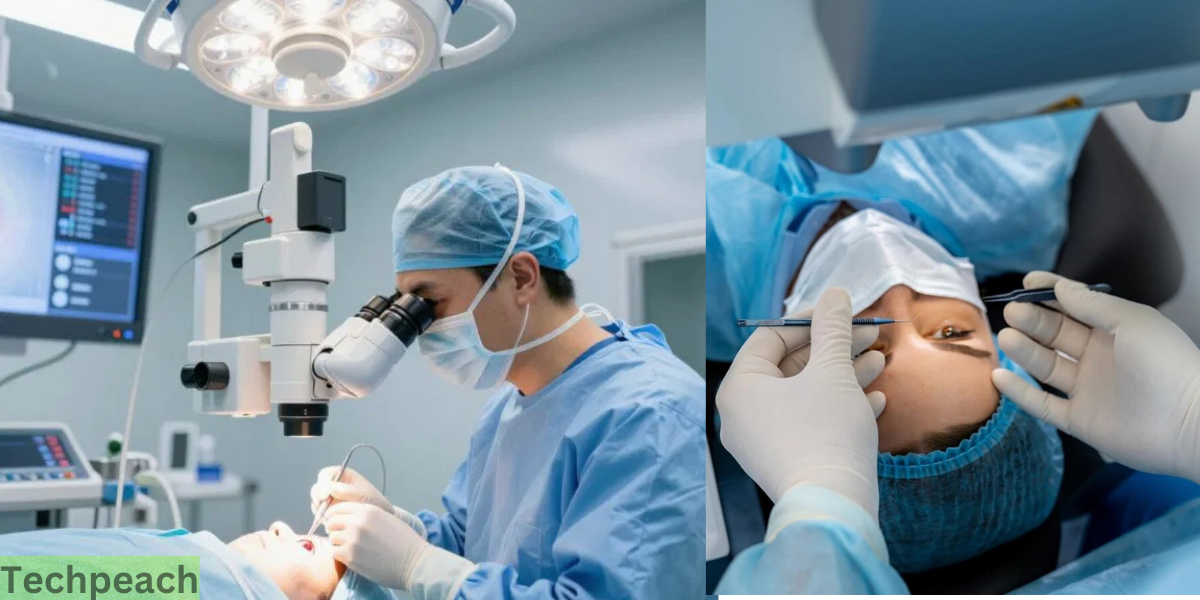
You have probably seen the ads for laser cataract surgery. It sounds super futuristic, right? Traditionally, cataract surgery uses a hand-held blade to make the incision and a probe to break up the cataract. Laser-assisted surgery uses a femtosecond laser to do the initial steps.
Does it work better? Studies generally show that the long-term results are very similar for standard patients. However, the cataract surgery cost for laser is almost always higher because the technology is expensive to buy and maintain.
Most insurance companies view the laser as “experimental” or “upgraded” for standard cases. That means if you choose laser over the traditional bladed method, you might get hit with a “technology fee” ranging from $500 to $1,500 per eye. It’s an option that is worth discussing with your surgeon, but don’t feel pressured into it if you are on a tight budget; the traditional method has a success rate that is through the roof.
The “Hidden” Extras That Catch People Off Guard
One of the biggest frustrations patients have is the surprise bills that show up weeks after surgery. You think you paid the big number on day one, and then boom, a bill for eyedrops or an office visit arrives. Here is what to watch for.
The YAG Laser Capsulotomy
Sometimes, weeks or months after surgery, the capsule that holds your new lens in place gets a little cloudy (called a posterior capsule opacification). Fixing this requires a quick, painless laser zap in the office—called a YAG capsulotomy. While often covered by insurance, you might still have a copay or co-insurance. According to Medicare data, the patient cost for this can average around $117 to $168 .
Medications and Eyedrops
You will need prescription anti-inflammatory and antibiotic drops after surgery. These can be surprisingly expensive if you don’t have good prescription drug coverage. Always ask your doctor if they have “surgery kits” or generic samples, as buying these drops at a retail pharmacy can add $200 to $500 to your total cataract surgery cost.
The “Optional” Pre-Op Tests
Are you healthy? If so, you might not need a chest X-ray or an EKG before surgery. However, some facilities load up on these tests as “protocol.” If you have a high deductible plan, ask if every single test is medically necessary. You don’t want to pay $300 for a test you didn’t need.
Paying Out of Pocket: Self-Pay Strategies
Not everyone has insurance, or maybe you have a high-deductible plan that effectively means you are paying cash until you hit $5,000 or $10,000. For you, the cataract surgery cost is a direct negotiation.
The sticker price is scary. A hospital might quote $10,000 per eye. But nobody actually pays that. For self-pay patients, the secret weapon is asking for the “Package Price.”
The SurgeryAssist Model
In some markets (like Australia, with varying models in the US), groups like Vision Hospital Group offer “SurgeryAssist” packages . These are all-inclusive deals. You pay one lump sum that covers the surgeon, the facility, the lens, the medications, and the follow-up visits. This eliminates the risk of getting a separate bill for anesthesiology three months later.
If you are in the US, always ask the billing department: “If I pay cash today, what is the discount?” Freestanding Ambulatory Surgery Centers (ASCs) are often much cheaper than hospitals for these packages because they have lower overhead. Some regions offer self-pay cataract surgery for as low as $1,800 to $2,500 per eye if you choose the standard lens, though $3,000 to $5,000 is more common.
Geographic Lottery: Location Changes Everything
It shocks people to learn that the exact same surgery done two states away can cost double. Data from the Becker’s ASC review and the JAMA study shows wild geographic variation. For instance, if you live in Connecticut or Alaska, prices tend to be significantly higher, likely due to higher costs of living and academic medical centers .
Why? Because in some states, hospitals have consolidated and now have a monopoly. If you need surgery and they own all the operating rooms in town, they can charge whatever they want. In more competitive states (like many in the Midwest or South), ASCs compete for your business, driving prices down. If you live in a high-cost area, it might actually be cheaper to be a “medical tourist” in another state than to stay local.
Financing Your Vision: Zero Percent Interest?
If you don’t have the cash sitting in the bank right now, don’t put off your surgery. Driving with untreated cataracts is dangerous. There are solid financing options available specifically for vision correction.
Many clinics partner with companies like CareCredit. This is a healthcare credit card. Often, they offer promotional financing like “No interest if paid in full within 12 or 18 months” . This can be a lifesaver. You get your vision fixed today and pay it off over a year.
However, be careful! If you are even one day late on that final payment, many of these plans will slap you with deferred interest (interest calculated from the original date of the surgery, which can be hundreds of dollars). It’s a great tool if you are disciplined. Also, check if you have a Health Savings Account (HSA) or Flexible Spending Account (FSA). Using pre-tax dollars for your cataract surgery cost effectively gives you a 20-40% discount on the total price, depending on your tax bracket.
Charitable Options and Assistance
If you are truly struggling financially and cannot afford the surgery even at the lowest cash price, there is help available. No one should go blind simply because they are broke.
In many countries, there are non-profit organizations dedicated to ending blindness. The Aravind Eye Care System (while based in India) has inspired global models. In the US, organizations like Mission Cataract (through ASCRS) and local Lions Clubs International often help patients access free or low-cost care .
How do you find it? Call your local health department or a large teaching hospital. Often, residents need to practice, and surgery is offered for free or at a drastically reduced cost in a teaching setting. You can also ask your eye doctor directly: “I cannot afford this. Are there any charity programs or surgery centers that offer sliding scale fees?” Often, they have a list of resources they forget to mention unless you ask.
How to Get an Accurate Quote
We have established that pricing is a mess. So, how do you protect yourself? You need to become a detective for an hour. When you call a surgeon’s office, do not accept a vague “Oh, it’s usually about two thousand dollars.”
You need to ask for an itemized estimate with specific CPT (Current Procedural Terminology) codes.
Here is exactly what to ask:
“Can you please give me a written estimate for CPT codes 66982 or 66984 (the codes for cataract surgery) including the facility fees, the surgeon fees, and the anesthesia fees? Also, please specify the upcharge for the specific lens I am considering.”
If they say “We don’t know the anesthesia cost,” that is a red flag. Call the anesthesia group yourself. Get it in writing. The cataract surgery cost on your final bill should match the estimate. If you have insurance, ask the provider to verify the benefits and get the pre-authorization before you walk into the OR.
A Final Look at the Numbers
Let’s talk real numbers based on the data we have from Medicare and commercial payers.
- Low End (Subsidized/Medicare with supplemental insurance): You might get away with paying as little as $117 for the laser cleanup procedure or $242 for the basic surgery if you have a good Medigap plan that covers your 20% coinsurance .
- Middle Ground (Standard Private Insurance/High Deductible): You are likely looking at your deductible. If you have a $1,000 to $3,000 deductible, you will likely be paying the negotiated rate until that is met.
- Cash/Self-Pay Standard Lens: Expect to pay between $3,000 and $5,000 per eye for a standard package at an Ambulatory Surgery Center.
- Cash/Premium Lens: If you want the “no glasses” trifocal lens and are paying cash, you are looking at $5,000 to $8,000+ per eye depending on the market.
The Hidden Value of Getting it Done
We spend a lot of time looking at the price tag and wincing. It is expensive. But I want to reframe this for a second. How much does it cost not to do it? A single fall from a hip fracture caused by poor vision can cost hundreds of thousands of dollars in hospital bills and rehab, not to mention the loss of independence.
Cataract surgery cost is an investment in safety. Think about the sheer joy of reading a menu without holding it six inches from your face, or driving confidently at dusk. The technology in 2026 is better than ever. While we want you to be a savvy shopper, we also want you to prioritize your vision. Don’t get stuck in “analysis paralysis” over a few hundred dollars if your quality of life is suffering.
Conclusion
Navigating the financial side of cataract surgery feels overwhelming, but it doesn’t have to be. We have learned that the cataract surgery cost is not a fixed number; it is a puzzle you can solve by choosing your facility wisely, understanding your insurance benefits (or lack thereof), and asking the right questions. Whether you are upgrading to a premium lens to reduce your dependence on glasses or sticking with the standard monofocal to keep expenses low, transparency is your best friend.
Don’t be afraid to shop around. Call three different clinics. Ask for the cash price. Ask about financing. And remember, while saving money is important, seeing the world clearly is priceless.
Frequently Asked Questions
What is the average cataract surgery cost with Medicare in 2026?
For a standard, medically necessary cataract surgery with a monofocal lens, Medicare Part B covers 80% after you meet your annual deductible ($288 projected for 2026). The average out-of-pocket cataract surgery cost for the beneficiary typically ranges from $242 to $456 per eye, depending on whether the procedure is done in a hospital or an ambulatory surgical center . If you have a Medigap plan, those costs might be covered entirely.
Why is my cataract surgery cost so high if I have insurance?
Even with insurance, you are subject to deductibles, copays, and coinsurance. If you haven’t met your yearly deductible yet, you pay the full “negotiated rate” until you do. Also, if you chose a premium lens (like a multifocal or toric) or laser-assisted surgery, your insurance company views these as “luxury upgrades” and will not pay for the extra thousand dollars or more that those technologies cost. The cataract surgery cost spikes dramatically when you move from “necessary” to “elective enhancement.”
Can I negotiate the price if I don’t have insurance?
Absolutely. In fact, you have the most power here. Ask for the “self-pay” or “prompt pay” discount. Facilities often waive 20-50% of the bill because they don’t have to deal with insurance paperwork. You can often find a complete cataract surgery cost package for the standard lens in the range of $2,500 to $4,000 if you look at independent surgery centers rather than large hospitals.
Does the cost include the follow-up visits and glasses?
Usually, no. This is a common trap. The surgical fee covers the day of surgery. You will likely have follow-up visits the day after, the week after, and the month after. While these are often “covered” by insurance, you may have a copay for each visit. Regarding glasses: Medicare Part B does cover one pair of basic corrective lenses (glasses or contacts) after cataract surgery, but only basic frames . Upgrades cost extra. Always clarify if the quote includes standard post-op meds and the one-month check-up.
Are there any hidden fees I should watch out for?
Yes. Watch out for separate “facility fees” if you thought the surgeon’s fee was the total. Also, look out for “prolonged stay” fees if you have a medical issue that keeps you in recovery longer than expected. Anesthesia is another big one—the surgeon and the anesthesiologist bill separately. Always request a “global fee” quote to lock in the cataract surgery cost upfront.
Does Medicare cover the laser procedure for after-cataract cloudiness?
Yes, if you develop a secondary cataract (posterior capsule opacification) after surgery, Medicare covers the laser procedure to fix it. This is code 66821 (YAG laser). The patient is typically responsible for the 20% coinsurance after the deductible. The average patient cataract surgery cost for this specific laser touch-up is around $117 to $168 .