
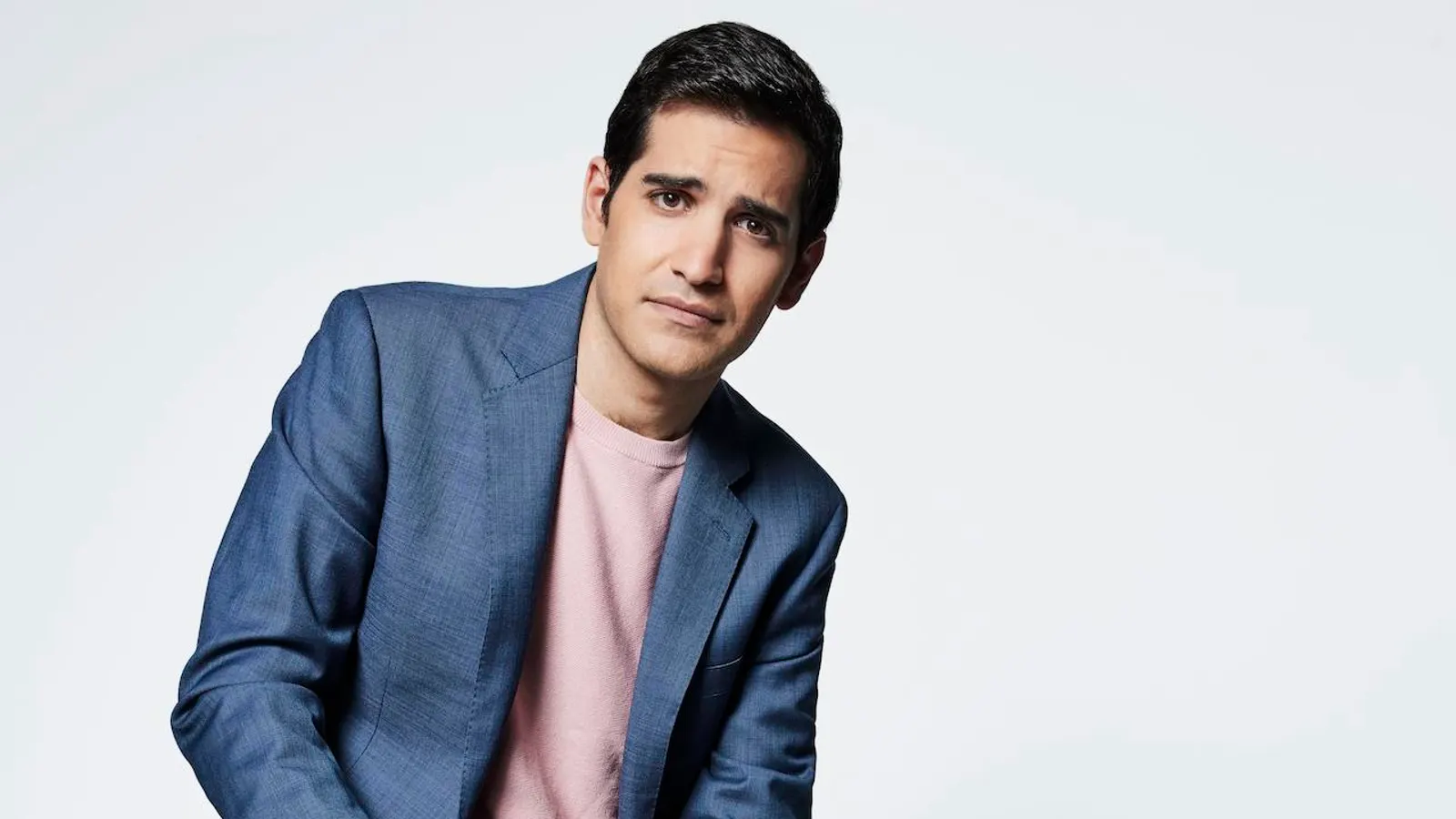
Let’s be real for a second. Political commentary can often feel like a shouting match where the loudest voice wins, not necessarily the most accurate one. But in the chaotic 24-hour news cycle, one voice cuts through the noise not with volume, but with sheer mathematical clarity. That voice belongs to Harry Enten. If you have watched cable news recently, you have likely seen him gesticulating wildly in front of a giant touchscreen, pointing at polling averages, or breaking down complex demographic trends into digestible, often hilarious, bite-sized pieces.
Harry Enten has carved out a unique niche in modern journalism. He is the nerd who became cool, the statistician who speaks in plain English, and the analyst who isn’t afraid to say, “I don’t know yet” when the data isn’t clear. In an era of punditry, he offers receipts. Recently promoted to Chief Data Analyst at CNN, Enten has become the network’s secret weapon for explaining why things are happening in American politics, rather than just what is happening. Whether you are a political junkie or a casual viewer trying to make sense of the midterms, understanding the work of Harry Enten is essential to understanding the modern political landscape.
His journey from the hallowed halls of Dartmouth College to the bright lights of CNN’s election desk is a testament to the power of intellectual curiosity. He doesn’t just read polls; he dissects them, looking for the “weighting” flaws, the margin of error traps, and the historical context that his competitors often miss. This article will dive deep into the career, methodology, and impact of Harry Enten, exploring why he has become the gold standard for data-driven political analysis and how his forecasts shape the way millions of Americans view elections.
The Rise of the “Whiz Kid” from FiveThirtyEight
Before he was a household name on CNN, Harry Enten was honing his craft at the mecca of data journalism: FiveThirtyEight. Founded by Nate Silver, this platform was the proving ground for a generation of stats-minded reporters. Enten joined as a senior political writer, and it didn’t take long for the “Whiz Kid” nickname to stick . At FiveThirtyEight, he wasn’t just crunching numbers; he was finding stories in them that no one else thought to look for. He combined a deep knowledge of history—being able to recall voting patterns from 1952 off the top of his head—with a rigorous understanding of statistical significance.
His work at FiveThirtyEight established the foundational style that fans love today. He focused heavily on the “boring” stuff that actually wins elections: demographics, voter turnout trends, and the specific voting habits of suburban women. Harry Enten mastered the art of the “deep dive,” writing long-form pieces that explained why a five-point swing in a specific Ohio county mattered more than a ten-point swing in a safe district. He left the outlet in 2018, but his legacy there is that of the bridge between academic political science and the average voter. He proved that data could be exciting, and that forecasting wasn’t just astrology for men who wear bowties; it was a legitimate science.
The CNN Promotion to Chief Data Analyst
In a move that signaled a serious commitment to data-driven journalism, CNN promoted Harry Enten to Chief Data Analyst in early 2025 . This wasn’t just a title change; it was a reflection of how integral he had become to the network’s identity. When viewers see Harry Enten on screen, they know they are getting unfiltered truth, even if that truth is uncomfortable for one party or the other. His segments often go viral because he presents information not as a partisan, but as a referee looking at the scoreboard.
His promotion highlighted CNN’s strategy to double down on analytics in a fragmented media landscape . As the host of the “Margins of Error” podcast, he explores the nuances that polling miss—the human element behind the numbers. In his new role, Enten doesn’t just report on political trends; he defines the network’s language around them. He is the one who decides which polls are credible and which are “garbage in, garbage out.” This elevation to the top of the hierarchy at a major cable news network is a rare victory for substance over spectacle, proving that audiences are hungry for analysis that respects their intelligence.
Breaking Down the Signature “Harry Enten” Style
If you have ever seen a clip of Harry Enten talking about politics, you know it’s not just the numbers that captivate people; it’s the delivery. He speaks at a rapid-fire pace, often sounding breathless with excitement over a standard deviation. He uses hand gestures like a conductor leading an orchestra, slicing through the air to show “upward trends” or “downward spirals.” This energetic presentation is a calculated effort to combat the “dryness” associated with statistics. He makes data visceral.
Moreover, Harry Enten is famous for his use of analogies. He doesn’t just say “the numbers are bad for the incumbent”; he says “the numbers are sinking faster than the Titanic trying to navigate a swimming pool.” He compares polling errors to missed field goals in the NFL. This casual, expert tone—blending high-level statistical knowledge with low-brow sports and movie references—makes him accessible. You don’t need a PhD in data science to understand Harry Enten; you just need to pay attention. He meets the viewer where they are, grabs them by the hand, and walks them through the spreadsheet.
The “Absolute Collapse” Analysis of 2026
One of the most explosive moments in recent cable news history came courtesy of Harry Enten in the spring of 2026. During a segment on CNN News Central, he unveiled polling numbers regarding President Trump that he bluntly labeled an “absolute collapse” . The data focused on Republican-leaning independents, a crucial voting bloc that had previously provided a buffer for the administration. Enten pointed to a drastic 38-point drop in approval among this demographic compared to the 2024 election results.
“We are talking about a ship going down into the deep blue sea,” Harry Enten exclaimed, pointing at his famous charts . He highlighted that while partisan Republicans remained loyal, the independents who lean right were waving “Adios, amigos.” This wasn’t punditry; it was math. He showed that while Trump had 91% support among this group in the 2024 election, that number had cratered to just 53% in his approval ratings . The segment went viral because it quantified voter anger in a way that talking heads couldn’t. Harry Enten provided the receipts, showing that a coalition was crumbling in real-time.
A Reality Check on Polling Extremes
The beauty of Harry Enten’s methodology is his insistence on context, even when the headlines are juicy. Earlier in 2026, he found himself in the awkward but necessary position of fact-checking a statistic that superficially looked great for the President. He highlighted an NBC News poll showing that Trump had a 100% approval rating among self-described MAGA Republicans. The President celebrated this number, calling it an “honor.”
However, Harry Enten quickly pivoted to provide the “reality check.” While that specific cohort was unified, he noted, “Donald Trump has never been more unpopular in his second term in office” when you look at the broader electorate. He cited a Fox News poll showing record-high disapproval ratings. This moment crystallizes why Harry Enten is trusted across the aisle. He doesn’t cherry-pick the data to fit a narrative. He shows you the 100% number, explains why it exists (the “base” is energized), but then slams the gavel down on the 50,000-foot view (the “general public” is fleeing). That duality is rare in modern media.
The Inflation Indicator and the Economy
No issue dominates political polling quite like the economy, and specifically, inflation. In April 2026, Harry Enten delivered a stark warning to the incumbent party regarding this issue. Citing a series of recent polls, he announced that President Trump was in his “worst position ever” on inflation, hitting “record lows” with net approval ratings as deep as -47 points . He didn’t mince words, quoting Happy Gilmore to emphasize that “the price is wrong.”
What makes Harry Enten’s take on economics so compelling is his linking of the issue to electoral consequences. He didn’t just stop at the bad number; he looked at independents. He found that among independents, the net approval rating on inflation was a staggering -60 points . Immediately, he translated that data into a forecast for the midterms: “You can wave adios, amigos, goodbye… to that House majority.” This is the value-add of Harry Enten. He bridges the gap between a feeling (groceries are expensive) and a political prediction (your local representative is likely going to lose because of it).
Historic Trends: Gubernatorial Races and the House
Harry Enten is a connoisseur of history, often digging up trends that seem quirky but hold predictive power. For example, in a September 2025 segment, he looked at the gubernatorial races in New Jersey and Virginia. While these are often seen as off-year afterthoughts, Enten pointed to a trend dating back to 1989 . He explained that if the same party wins both the New Jersey and Virginia governor’s mansions, that party wins the U.S. House of Representatives the next year six out of seven times.
When anchor Kate Bolduan called it a “cool stat,” Harry Enten beamed . This is his sweet spot. He takes obscure historical data points and turns them into a flashing red siren (or a green light) for national parties. By showing that Democrats were favored to win both states, he essentially gave an early warning to Republicans that their House majority was in jeopardy. This ability to use the past as a prologue is what separates Harry Enten from analysts who just look at the “generic ballot” question every day.
Demographic Shifts: The Black Vote and the GOP
One of the most significant long-term stories in American politics is the realignment of racial demographics, specifically the slow shift of Black voters toward the Republican party. Harry Enten has been on the forefront of tracking this story with precision. In a spring 2026 report, he noted that the GOP was “expanding Trump’s gains with Black voters” . While Democrats still held a massive advantage, Enten pointed out that the margin had shrunk by about 12 points in party identification.
“The Donald Trump-led Republican Party is making gains among African Americans that we, simply put, have not seen the Republican Party make in a generation,” Harry Enten stated. He highlighted specific numbers showing Trump’s approval among Black voters rising from 12% to 16% compared to his first term. For a data analyst, these single-digit movements matter intensely because they are happening in dense population centers. As Harry Enten pointed out, in a place like Georgia, even a fractional shift in the Black vote can be the difference between a runoff and a landslide. It is a trend that his viewers will be watching closely for the rest of the decade.
The “Margins of Error” Podcast
Beyond the television screen, Harry Enten has taken his talents to the audio world with his podcast, “Margins of Error.” The title itself is a clever nod to the statistician’s constant companion—the margin of error being the buffer zone that keeps pollsters humble. On the podcast, Enten gets to slow down. He moves away from the “breaking news” chyrons and dives deep into the methodological weeds that he loves so much.
The podcast allows Harry Enten to interview other experts, discuss the philosophy of polling, and explore historical elections without the pressure of a live TV hit. It is essential listening for anyone who wants to understand why polling sometimes gets it wrong. He tackles the “Dueling Polls” phenomenon head-on, explaining that just because two polls disagree doesn’t mean one is lying; it likely means their methodologies differ. The podcast solidifies his reputation not just as a TV personality, but as a serious journalist dedicated to the craft of data literacy.
Family Ties and Intellectual Lineage
It is impossible to talk about Harry Enten without acknowledging the fascinating intellectual environment he was raised in. He is the son of the renowned psychiatrist and author Abigail Pogrebin, though perhaps more publicly, he is closely associated with the legacy of his late stepfather, the famous journalist and author Pete Hamill. While Enten rarely leans on this for his credibility—preferring the hard data of Dartmouth College (where he graduated Phi Beta Kappa, Summa Cum Laude) —it is clear that storytelling is in his blood.
Unlike the standard political operative who might come from a campaign background, Harry Enten comes from an academic and literary background. He combines the creative instinct for narrative with the rigid structure of scientific inquiry. Growing up in the Bronx as a diehard Buffalo Bills fan , he also possesses the everyman quality of a loyal sports fan. This background allows him to write about politics with a sense of joy and pain that resonates with normal people. He knows what it feels like to root for a team that repeatedly defies the odds (in his case, the Bills), which gives him a certain empathy for politicians trying to beat the betting markets.
How Enten Compares to Other Polling Analysts
In the crowded field of data journalism, Harry Enten holds a distinct position. Compared to his former colleague Nate Silver, who often focuses on the probabilistic models and the “meta-game” of forecasting, Enten focuses more on the inputs. He wants to talk about the crosstabs—the specific answers given by young voters in Michigan or retirees in Florida. While Silver might say, “Candidate X has a 60% chance to win,” Enten will say, “Candidate X is winning the senior vote by 10 points, which is up from 4 points last month; here is why that matters.”
Furthermore, Harry Enten is more televisual than many of his peers. Analysts like David Wasserman (The Cook Political Report) are brilliant, but Enten has mastered the “touchscreen” theater of cable news. He points, he draws, he exclaims. He brings a level of showmanship to statistics that is usually reserved for sports analysts on ESPN. This ability to perform without sacrificing substance is why CNN invested so heavily in his promotion. He is the rare analyst who can go viral on TikTok for a “funny face” he makes while revealing a bad poll for a politician.
The Future of Data Journalism with Enten
As we look toward the 2026 midterms and beyond, the role of Harry Enten is only going to grow. The world is getting more complex, and the old punditry of “I feel like the mood is shifting” is being replaced by “the data suggests the mood is shifting.” Harry Enten is at the forefront of this cultural shift toward quantitative literacy. He is training an entire generation of news consumers to ask better questions, such as: “Who was polled?” and “What is the margin of error?”
His recent appointment as Chief Data Analyst is a signal that CNN intends to make data the backbone of its political coverage . We can expect to see Harry Enten leading the network’s “Decision Desk” on election nights, not just as a commentator but as the authority explaining the exit polls in real-time. He represents the future: a future where facts are stubborn things, and statistics are not just numbers, but stories waiting to be told. As long as Harry Enten is on the air, viewers will have a trustworthy guide through the wilderness of political noise.
Conclusion
Harry Enten is more than just a guy pointing at charts on CNN. He is a vital interpreter in a broken information ecosystem. By blending a rigorous academic background with a genuinely goofy and engaging on-air personality, he has done the impossible: he made math appointment viewing. From his early days at FiveThirtyEight to his current perch as Chief Data Analyst, he has remained consistent in his mission to hold power accountable not with opinions, but with percentages.
His analysis of the “absolute collapse” among certain voter bases , his honest reality checks regarding polling extremes , and his deep dives into demographic shifts provide a clarity that is sorely lacking in modern discourse. Whether you agree with his conclusions or not, you cannot deny the rigor of his process. Harry Enten has built a career on the admission that he might be wrong, but the numbers are what they are. In doing so, he has earned a level of trust that few media figures possess. As the 2026 cycle heats up, expect to see a lot more of him, and expect to learn something every time he picks up that stylus.
FAQ
Who exactly is Harry Enten?
Harry Enten is the Chief Data Analyst for CNN and the host of the “Margins of Error” podcast . He specializes in data-driven journalism, focusing on political polling, demographics, and electoral trends. Before joining CNN, he was a senior political writer at FiveThirtyEight, where he earned the nickname the “Whiz Kid” for his sharp analytical skills. He is a Dartmouth College graduate who hails from the Bronx and is a well-known Buffalo Bills fan.
Why did CNN promote Harry Enten to Chief Data Analyst?
CNN promoted Harry Enten to Chief Data Analyst in February 2025 to double down on data-driven coverage during a critical election cycle . His unique ability to explain complex polling data in an accessible, engaging way has made him a standout talent. The promotion reflected his integral role in the network’s political coverage, allowing him to lead data-driven segments and set the standard for how CNN discusses polling and statistics across all platforms.
What is Harry Enten’s educational background?
Harry Enten graduated from Dartmouth College, one of the Ivy League’s most prestigious universities. He graduated Phi Beta Kappa and Summa Cum Laude, which are the highest honors a student can achieve, indicating his exceptional academic performance . He earned a degree in Government, which explains his deep understanding of political systems and historical voting patterns.
What does “margin of error” mean in Harry Enten’s analysis?
When Harry Enten discusses the margin of error, he is describing the range within which the true value of a poll likely falls. For example, if a candidate has 50% support with a margin of error of +/- 3%, their true support could reasonably be as low as 47% or as high as 53%. Harry Enten uses this to caution viewers against getting too excited about small changes in polls; if the numbers move within the margin of error, it is often just statistical noise, not a true shift in the race.
How does Harry Enten predict election outcomes?
Harry Enten does not rely on a magic 8-ball; he relies on a combination of historical data, current polling aggregates, and demographic trends. He looks at “crosstabs” (the breakdown of polls by age, race, education, and location) to see who is moving and why. He famously uses historical analogs, such as comparing current approval ratings to past presidents or looking at gubernatorial races in Virginia and New Jersey to predict the national House vote . He looks for patterns that have held up over several election cycles.
You May Also Read
CNN’s 2026 Midterm Election Forecast and Analysis
How Polling Margins of Error Work: A Beginner’s Guide