
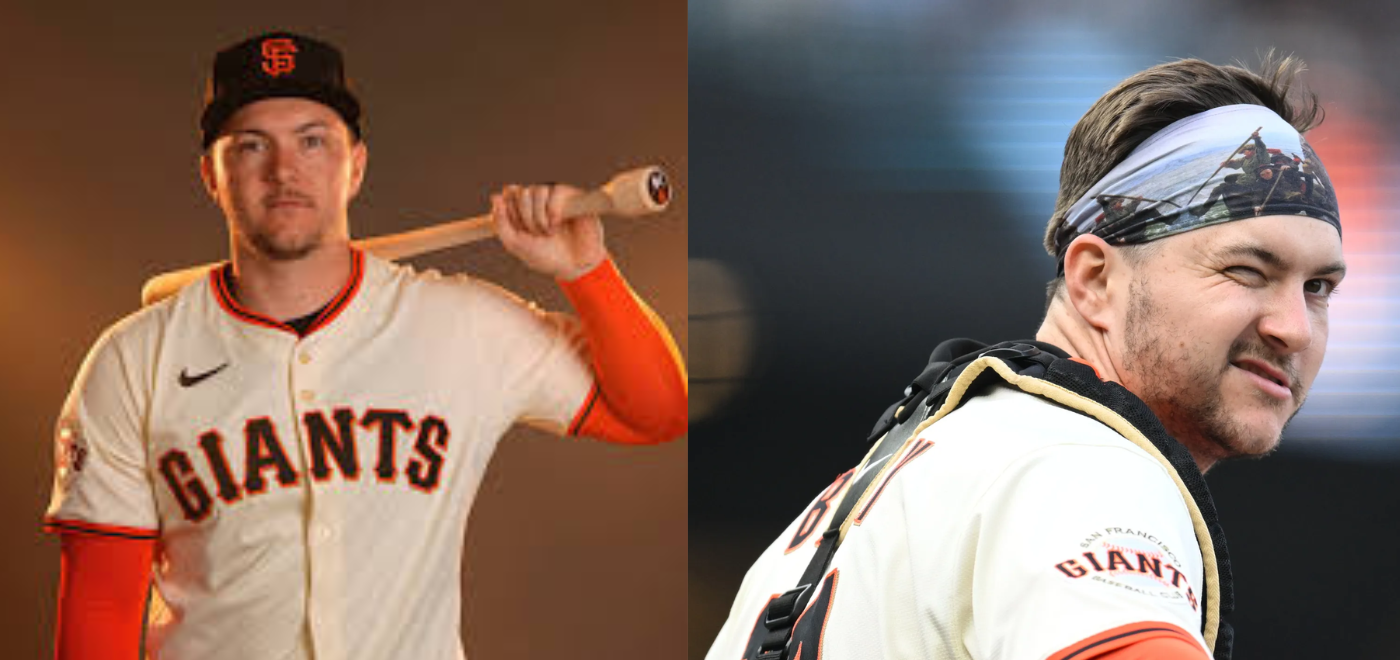
Baseball is a funny game. One day, you’re the heir apparent to a legend, a first-round draft pick destined for greatness. The next, you’re packing your bags for a new city because the team that drafted you can no longer wait for your bat to catch up to your glove. That is the exact rollercoaster ride we just witnessed with Patrick Bailey.
If you blinked in May 2026, you might have missed it. The San Francisco Giants, a franchise synonymous with legendary catchers, shipped their two-time Gold Glove backstop to the Cleveland Guardians. It was a move that sent shockwaves through the fantasy baseball world and the clubhouses alike.
We are talking about a player who is arguably the best defensive catcher on the planet. Yet, he currently owns a batting average that makes pitchers look like sluggers. So, how did we get here? Is Patrick Bailey a bust, or is he just a victim of the modern “three true outcomes” era where batting average is dying? More importantly, what does this trade mean for the Cleveland Guardians?
Grab your glove and your favorite stats site. We are going deep into the enigma that is Patrick Bailey. We’ll look at the stats, the scouting reports, the “Tugboat,” and what the future holds for one of the most lopsided talents in Major League Baseball.
The Golden Glove That Speaks Louder Than Words
When we talk about catchers, we often say, “If he hits, it’s a bonus.” For Patrick Bailey, that phrase has never been more literal. Let’s not dance around the issue: this guy is a wizard behind the plate. In an era where pitch framing is becoming a lost art due to the impending robot umps, Bailey is keeping the human element alive and thriving.
He won the National League Gold Glove in 2024 and 2025. That isn’t a fluke. According to Baseball Savant, his Fielding Run Value sits in the 99th percentile. That means he is saving his team runs almost every time he puts on the gear. We are talking about the difference between a 3-2 win and a 4-3 loss. He leads the majors since his debut in 2023 with an astonishing 69 catcher framing runs. That isn’t just good; that is historically elite territory.
But it’s not just the framing. Have you seen his arm? The man operates like a silent assassin. His average pop time (the time it takes to receive, transfer, and throw to second) is consistently among the best in the league. He ranks in the 100th percentile in Pop Time, which frankly sounds impossible until you watch him nail a runner who thought they had an easy bag. He has thrown out nearly 30% of attempted base stealers over his career, a rate that keeps opposing coaches from waving runners home.
He is the complete defensive package. He blocks balls in the dirt, he calls a smart game, and the pitching staffs he works for tend to love him. When the Giants traded him, you could almost hear the sighs of rotation pitchers like Logan Webb. You can’t quantify “pitch calling” easily, but the results—the 42 defensive runs saved over the past two-plus seasons—are very real.
The Black Hole in the Batter’s Box
Now, we have to rip the band-aid off. Because for all the magic Bailey provides with his mitt, he provides the opposite with the bat. In fact, the 2026 season was turning into a nightmare before he even left San Francisco. Through 89 plate appearances, Patrick Bailey was slashing a brutal .146/.213/.183.
Let’s put that into perspective. If you are a casual fan, you know .200 is bad. .150 is “send him to Triple-A” territory. He had a -11 Batting Run Value, which placed him in the first percentile in all of baseball. Yes, you read that right. First percentile. He was statistically one of the least productive hitters in the world.
What happened to the guy who hit 18 home runs? Well, Oracle Park in San Francisco is a pitcher’s paradise, but that doesn’t fully explain the slump. Bailey has a career average of .224 with a .611 OPS. He isn’t a “slugger” by trade, but the drop-off in 2026 was alarming even by his own low offensive standards. He wasn’t just getting unlucky with hard-hit outs; he was making weak contact, striking out, and looking lost.
His nickname is “Patty Barrels,” which is ironically hilarious given that he rarely barrels the ball up anymore. The Giants, desperate to climb out of the NL basement and boasting the worst record in the National League, decided they couldn’t afford a defensive specialist who was essentially an automatic out in the lineup. When your team is last in scoring, you can’t have a dead spot in the order, no matter how good the glove is.
The Trade: Why Buster Posey Pulled the Trigger
This is the part of the story where things get emotional for Giants fans. Buster Posey, the legend himself, is now the President of Baseball Operations. Trading away a young, defense-first catcher feels like Posey looking into a mirror and seeing his own reflection—except Posey could hit .300 with runners in scoring position. The front office realized that “runs scored” is the priority over “runs prevented”.
The return for Patrick Bailey was specific and smart. The Giants received left-handed pitching prospect Matt Wilkinson, affectionately nicknamed “Tugboat,” and the 29th overall pick in the 2026 draft.
Why “Tugboat”? Because the dude is built like a fire hydrant and throws gas. In Double-A Akron, Wilkinson was dominating with a 1.59 ERA and striking out batters at a ridiculous clip. He is the kind of high-floor, grinder pitcher that the Giants love to develop. The 29th pick is also a Competitive Balance pick, meaning it comes with extra bonus pool money. Essentially, Posey traded one expensive (in terms of roster spot) problem for two valuable assets that can help the team rebuild its depth.
From the Giants’ perspective, they had seen enough. With Daniel Susac (a Rule 5 pick) raking in the minors and Jesus Rodriguez showing promise, the math simply didn’t add up. It was a ruthless business decision. But just because it was a smart baseball move doesn’t mean it didn’t hurt. Bailey was supposed to be the guy who caught the next no-hitter at Oracle Park.
A Fresh Start in Cleveland: The Guardians’ Gamble
Now, let’s flip the script and look at the winners of this deal: the Cleveland Guardians. At first glance, this trade seems weird. The Guardians already had Bo Naylor and the veteran Austin Hedges. Why add another light-hitting catcher? Because the Guardians are obsessed with defense, and they just got the Mona Lisa of catchers.
Upon acquiring Patrick Bailey, the Guardians immediately optioned Bo Naylor to Triple-A Columbus. That tells you everything you need to know about how they felt about Naylor’s recent performance. In Cleveland, the philosophy is simple: pitching wins, and catchers keep the pitching stable.
Bailey enters a room that includes Austin Hedges, another defense-first wizard. This is actually a perfect environment for him. Hedges is one of the best clubhouse leaders in the game. Instead of being the guy who has to carry the load and worry about his batting average, Bailey can focus on what he does best: catching. He can learn from Hedges, split time, and hopefully let the offensive pressure dissipate.
The Guardians are banking on the change of scenery. While Oracle Park in San Francisco suppresses offense, Progressive Field in Cleveland isn’t exactly a hitter’s paradise either, but the psychological reset matters. The Guardians have a history of taking guys with “bad bats” and turning them into serviceable players by simply asking them to make contact. If Patrick Bailey can hit .230 with a few clutch doubles, the Guardians will have won this trade handsomely.
Breaking Down the Physical Tools
Let’s get into the nitty-gritty scouting report. You can’t talk about Patrick Bailey without talking about the build. Standing at 6 feet tall and weighing 223 pounds, he is a sturdy, thick-set athlete. He isn’t going to steal bases (he has 8 career steals), but that mass helps him absorb the punishment of 162 games behind the plate.
When you watch him catch, the balance is incredible. He has soft hands that steal strikes on the edges of the zone. Umpires trust his glove. There is a reason his nickname is “Patty Barrels”—it’s a play on “Barrels” (hard-hit balls), but ironically, on defense, he is a barrel of consistency.
Offensively, the swing is a work in progress. He is a switch-hitter, which is valuable, but his power plays better from the right side. He hits the ball on the ground too often, and his launch angle suggests he needs a mechanical overhaul. Currently, his OPS+ for 2026 was sitting at a ghastly 16 (100 is league average). That is not a typo. He was 84% worse than the average hitter. For the Guardians to succeed, they need him to get back to his 2024 form (.234/.298/.339), which is still below average but not a lineup killer.
The Numbers That Matter
To really understand where Patrick Bailey stands, we have to look at the spectrum of his career.
Here is a quick snapshot of his MLB journey so far, courtesy of Baseball-Reference.
| Season | Games Played | Batting Average | Home Runs | OPS | Defensive Highlights |
|---|---|---|---|---|---|
| 2023 | 97 | .233 | 18 | .672 | Solid Rookie Year |
| 2024 | 121 | .234 | 8 | .637 | NL Gold Glove Winner |
| 2025 | 132 | .224 | 13 | .618 | NL Gold Glove Winner |
| 2026 (Pre-Trade) | 28 | .146 | 1 | .396 | Elite framing, horrid bat |
As you can see, the glove is the constant. But the 2026 drop-off was steep. The Guardians are hoping that small sample size (only 28 games played for the Giants in 2026 before the trade) was just an early-season anomaly.
“He leads the majors since 2023 with 69 catcher framing runs… but he was batting .146. It is the ultimate tale of two cities.”
— Analysis of the Bailey paradox
Fantasy Baseball Implications
If you are a fantasy baseball manager, you are probably pulling your hair out over this guy. Patrick Bailey is a “God” in catcher defense points leagues (if your league scores defensive value), but in standard 5×5 categories (R, HR, RBI, SB, AVG), he is a nightmare.
However, the move to Cleveland might actually help his fantasy stock. Why? Playing time. In San Francisco, he was starting to lose at-bats because the Giants were desperate for offense. In Cleveland, they are committed to him as the future. He will play 4-5 times a week. Volume matters.
If you are in a deep dynasty league, buying low on Bailey right now is the smart play. His batting average on balls in play (BABIP) was unsustainably low to start 2026. He isn’t a .150 hitter. He is likely a .235-.240 hitter with 10-15 home run pop. That is gold at the catching position, especially when he contributes 70+ runs scored due to the Guardians’ ability to get on base ahead of him. Don’t let the early-season yips fool you; the defensive job security keeps him on the field.
The “What If” Scenario
Let’s talk about the elephant in the room. What if he never hits? What if the .146 is a sign of things to come rather than a fluke? There are examples in baseball history of elite catchers who couldn’t hit a lick. Guys like Jeff Mathis or Jose Molina carved out decade-long careers because they were pitching whisperers. Patrick Bailey is on that trajectory, but he has the pedigree of a first-round pick.
The pressure is now off. In San Francisco, he was “the next Buster Posey.” In Cleveland, he is “the guy we traded for to fix the pitching staff.” That change in narrative is massive. Cleveland’s coaching staff is renowned for fixing swings. If they can add just a little bit of loft to his swing, Bailey could turn into a .250 hitter with 15 dingers. If that happens, combined with his defense, he becomes a Top 5 catcher in baseball.
Until then, baseball fans will watch with bated breath. Will the real Patrick Bailey please stand up?
Conclusion
The story of Patrick Bailey is far from finished. It is a chapter about the shifting values of modern baseball. We live in an era where the three-true outcomes (home run, walk, strikeout) dominate. Yet, here is a player who makes his living off the “untrue” outcomes—the dirty slider in the dirt, the laser throw to second, the stolen strike on the black.
The San Francisco Giants decided that the future had to score more runs. The Cleveland Guardians decided that run prevention is still the secret sauce to winning the AL Central. On May 8, 2026, the baseball world saw a rare event: a straight-up “hockey trade” of a prospect and a pick for a proven (if flawed) commodity.
Patrick Bailey will suit up in a Guardians uniform, likely sharing time with the veteran Hedges. He will frustrate base runners, rob hits, and likely… struggle at the plate a bit more. But for the first time in his career, that might be okay. Cleveland wants him to be a wall behind the plate. If he hits, that’s just the tip of the iceberg.
So, keep your eyes on the Guardians’ box scores. Watch for the caught stealing numbers. Because while the home runs might be rare, the game-saving defensive plays from Patrick Bailey are about to become a regular occurrence in Ohio.
Frequently Asked Questions
What specific defensive metrics make Patrick Bailey so valuable despite his low batting average?
Patrick Bailey dominates what is called Catcher Framing Runs. Since his debut, he has saved nearly 70 runs just by turning balls into strikes. He also ranks in the 100th percentile in Pop Time, meaning he has one of the fastest releases in the league when throwing to second base. Combine that with a 28.3% caught-stealing rate, and you have a player who actively prevents the other team from scoring, even if he doesn’t drive in runs himself.
Why did the San Francisco Giants decide to trade Patrick Bailey?
The Giants were in a brutal offensive slump, ranking last in the majors in runs scored. Buster Posey, the head of baseball operations, decided the team could no longer afford to have a catcher who was hitting .146. With top prospects like Daniel Susac hitting well and needing playing time, the Giants traded Bailey for future assets (pitching prospect Matt Wilkinson and a high draft pick) to try to jumpstart their offense.
What are the expectations for Patrick Bailey now that he is with the Cleveland Guardians?
Expectations are tempered offensively but sky-high defensively. The Guardians plan to use him in a platoon with veteran Austin Hedges. They want him to focus on handling their young, dynamic pitching staff. If he hits .230 with a few home runs, the Guardians will be thrilled. The pressure to be a star hitter is gone; he just needs to be a major league average hitter while continuing his elite defense.
How did the nickname “Patty Barrels” originate for Patrick Bailey?
The nickname “Patty Barrels” is a bit of an ironic twist on baseball slang. A “barrel” is Statcast’s term for a perfectly hit ball. Given that Patrick Bailey struggles with hitting the ball hard consistently, the nickname is often used playfully by fans and teammates to tease his power outage, though it originated during his college days at NC State when he was known for making loud contact.
Is Patrick Bailey a good fit for fantasy baseball owners?
In standard fantasy leagues, he is a streamer or a deep-league play. He won’t help you in batting average or home runs. However, in Points Leagues or leagues that reward defensive stats (like putouts or passed balls), he is a cheat code because catchers accumulate so many chances. His value lies in playing time. Since the Guardians traded for him, they will play him often, giving you a consistent starting catcher.
You May Also Read
The Evolution of Pitch Framing: Why It Matters More Than Ever
The Cleveland Guardians Pipeline: Top Prospects to Watch in 2026
Buster Posey: From Player to Front Office Executive
Fantasy Baseball Catcher Rankings: The Waiver Wire Wonders
San Francisco Giants Post-Posey Era: A Rebuilding Timeline