
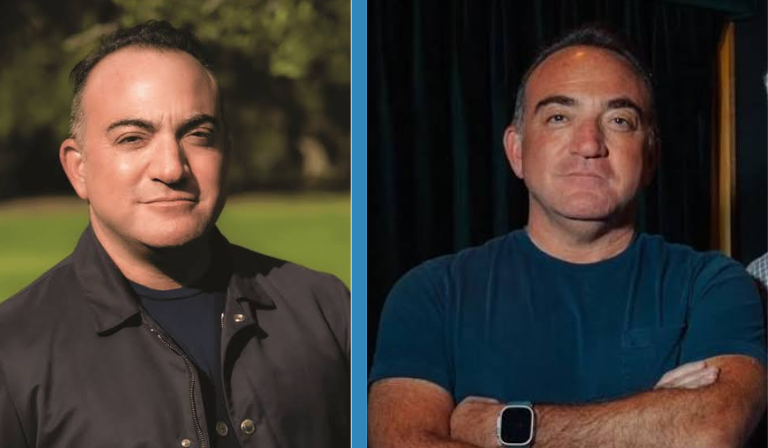
It is not every day that you come across a career as uniquely layered and surprisingly influential as that of Jed Weitzman. If you are a fan of live music, a comedian who got their start in the late 90s, or even just someone who has ever tried to buy a concert ticket and wondered why it costs what it does, you have likely been touched by his work. This is the story of a guy who cut his teeth in the chaotic writers’ rooms of comedy legends, managed rock stars, and is now quietly reshaping how the live event industry does business.
The entertainment industry is often painted as a world of glamour, but for those who work behind the scenes, it is a grind of logistics, relationships, and adaptation. Few people embody this “working man” approach to showbiz quite like he does. His career is not defined by a single hit song or blockbuster film, but by the sheer breadth of his influence across the entertainment ecosystem. He has sat in the talent manager’s chair, negotiated global tours for some of the world’s biggest names, and now sits at the intersection of technology and live events, attempting to solve one of the industry’s most persistent headaches: the ticketing crisis. This article is a deep dive into the life and career of a man who has managed to stay relevant in an industry that is notoriously fickle, painting a picture of a career built on curiosity, hard work, and an enduring commitment to the artist.
The Foundation: A Hollywood Upbringing and a Legendary Stepfather
To understand the trajectory of Jed Weitzman, you have to start in Los Angeles, where he was born on June 26, 1971 . He is the son of Stacey Weitzman, a notable PR executive, and Howard Weitzman, a legendary entertainment attorney whose clients included some of the biggest names in Hollywood . This connection gave him an early and intimate look at the mechanics of the entertainment industry. The divorce of his parents and his mother’s subsequent marriage to Henry Winkler only deepened this connection.
For many of us, Henry Winkler is “The Fonz.” But for him, he is a stepfather who profoundly shaped his life. Winkler has often shared a touching story about their first meeting. On their first date, Stacey opened the door, and there was 4-year-old Jed, who immediately greeted him with a cheerful, “Hi, Fonz!” This moment of instant connection was solidified years later when the pair discovered they shared a diagnosis of dyslexia . This understanding of learning differences and the perseverance required to succeed in academia likely created a unique bond and a shared determination to prove themselves in their respective fields. This upbringing provided him with a front-row seat to celebrity and success, but also a strong grounding in the business realities of the industry.
The NBC Years: Learning from the Masters at SNL and Conan
He did not use his connections to jump straight to the top. Instead, he started at the very bottom. In 1993, he landed his first job out of college as an assistant to the legendary Lorne Michaels at “Saturday Night Live” and also worked on “Late Night with Conan O’Brien” . For those unfamiliar with the television hierarchy, an assistant on a show like SNL is often the most grueling and demanding entry-level position imaginable. It involves long hours, high-pressure environments, and handling the needs of some of the biggest egos in comedy .
However, there is no better place to learn the business. As he later told Pollstar, “working for Lorne Michaels at ‘Saturday Night Live’ straight out of college gave me an amazing foundation for my career” . This experience offered a masterclass in production, talent management, and the sheer intensity required to produce a weekly live television show. It was here that he developed the work ethic and thick skin necessary to survive in the entertainment world. This stint provided a crucial education in the rhythm of television production and a network of connections that would serve him well in his next role.
The Brillstein-Grey Era: Architect of the Comedy Boom
In 1994, he moved into a talent management role that would define his early career. He joined the prestigious Brillstein-Grey Entertainment, where he would spend nearly a decade shaping the trajectory of comedy . At Brillstein-Grey, he was responsible for managing a staggering roster of comedy talent. His clients included Stephen Colbert, Steve Carell, Zach Galifianakis, David Spade, Chris Farley, and Dennis Miller, to name just a few .
Imagine being in a room where the foundational comedy of the late 90s and 2000s was being shaped. He wasn’t just observing; he was an active participant. He managed talent on iconic shows like “The Larry Sanders Show,” “Mr. Show,” and “The Dana Carvey Show” . He was deeply involved in the creative and business sides of their careers, helping to guide them through the volatile landscape of television and film. This period cemented his reputation as a “talent whisperer” of sorts, someone who understood comedy and the personalities of comedians intimately. His work during this era helped bring some of the most beloved comedic voices of a generation into our living rooms.
The Pivot to Music: Managing Legends Like Morrissey and Jane’s Addiction
In 2003, he made a surprising, yet calculated, decision to pivot from television comedy to the music industry . He took a role as a talent manager at The Sanctuary Group, later partnering with Warner Music Group . This was a departure from his previous work, but his management skills were highly transferable. He was now tasked with overseeing world tours, recordings, and licensing deals for some of the biggest names in music.
His client list read like a “Rock and Roll Hall of Fame” ballot. He managed Jane’s Addiction and Morrissey, and his work also involved negotiating deals for icons like Prince, Billy Joel, Tom Petty & The Heartbreakers, Dave Matthews, and James Taylor . He was responsible for everything from production oversight to approving global licensing deals. This experience taught him the global scale of the music business. He was no longer just focused on the American television market; he was helping to facilitate tours across continents and managing the complex financial structures that support them. This is where his ability to think big and navigate complex deals really began to shine.
A Diverse Portfolio: Strummer Entertainment, IAC, and Tech
The modern entertainment executive cannot just be a “TV guy” or a “music guy.” Recognizing this, he diversified his portfolio. He ran his own company, Strummer Entertainment, and held leadership positions at IAC, Buddy Media, and Fashion GPS . This period of his career was defined by his foray into the digital and tech space.
Jed Weitzman served as a partner and president of Electric Avenue, Will Arnett’s production company, from 2014 to 2016 . At Electric Avenue, he was responsible for sourcing and producing content across multiple platforms, including broadcast television, Netflix, and Xbox . This role required him to bridge the gap between traditional content creation and the emerging digital distribution landscape. By understanding streaming, digital media, and social platforms, he positioned himself at the forefront of the industry’s evolution, demonstrating that he could adapt to the rapid changes in how audiences consume content.
Ticketing 2.0: Building the Music Division at Logitix
The current and perhaps most significant chapter of his career began in 2022 when he was named Head of Music at Logitix . Logitix is a live-event ticketing technology and analytics company, and in his role, he is tasked with leading the company’s music division. The goal is to use data, dynamic pricing, and optimized distribution to help artists, promoters, and venues sell tickets more effectively.
Before joining Logitix, he had already laid the groundwork for this role. He built the music division for Ticket Evolution and consulted for over 60 major concert tours . He was a prominent voice in the ticketing industry long before his appointment, even participating in panels at Pollstar Live! discussing the future of ticketing and “open distribution” . His philosophy is rooted in a simple but powerful concept: an artist-first approach. He argued that “there is nobody helping artists, teams, and promoters more in the ticketing space than Logitix” . He aims to solve the perennial issue of artists leaving money on the table and fans feeling ripped off. By using data-driven insights, he believes the industry can create a more efficient and equitable marketplace. His work in this space is trying to bring a staid and opaque industry into the 21st century.
The Morrissey Factor and His Approach to Artists
One of the most persistent stories that follows him is his relationship with Morrissey. Both he and Morrissey have a reputation for being strong-willed and doing things their own way. When asked about a story he would not tell during a panel, he cryptically mentioned, “How I got Morrissey to apologize for canceling a gig…” This story perfectly encapsulates his approach to artist management. It speaks to the difficulty of handling temperamental talent while maintaining a sense of humor and a focus on the goal.
To be a successful manager, you need to have the patience of a saint and the negotiating skills of a diplomat. Managing someone like Morrissey requires an understanding of the artist’s vision and an ability to get things done despite the obstacles. This anecdote shows his ability to handle high-pressure situations with a bit of wit and a deep understanding of the artist’s psychology. He advocates for artists, but he also knows how to get the best out of them. It is this combination of empathy and pragmatism that has made him a trusted figure for so many over the years.
Key Milestones and Achievements
Jed Weitzman career is a testament to the power of being able to adapt and learn. He has had a very unique path that has led to many high-profile successes.
| Role/Position | Organization | Key Contributions/Highlights |
|---|---|---|
| Assistant | Saturday Night Live / Late Night with Conan O’Brien | Started his career under Lorne Michaels, gaining a foundational education in television production and talent management . |
| Talent Manager | Brillstein-Grey Entertainment | Spent nearly a decade managing comedy legends including Stephen Colbert, Steve Carell, and Zach Galifianakis during the 90s comedy boom . |
| Manager (Music) | The Sanctuary Group / Warner Music Group | Pivoted to the music industry and managed iconic artists such as Jane’s Addiction and Morrissey . |
| President / Partner | Electric Avenue (with Will Arnett) | Sourced and produced content for multiple platforms, including Netflix and Xbox . |
| Head of Music | Logitix | Leads the music division, optimizing ticket sales through data analytics and dynamic pricing . |
Weitzman on the Artist-First Philosophy
“Throughout my career, I have always taken the approach to consider the artist first.”
Conclusion
The story of Jed Weitzman is not just a biography of a successful entertainment executive; it is a masterclass in career reinvention and the value of deep industry knowledge. From the chaotic hallways of SNL to the boardrooms of Warner Music and the data-driven world of ticketing technology, he has navigated a career of immense diversity. He has successfully managed the most demanding talent in comedy and music, adapted to the digital disruption of the entertainment industry, and is now tackling one of its most complex issues—the live event experience—from the inside out. He is the rare executive who understands the artist’s perspective, the audience’s frustration, and the technological solutions required to bridge that gap.
His career shows us that success in the entertainment industry is not just about who you know (though that helps), but about what you can learn and how you can adapt. He has transitioned seamlessly across different sectors of the industry, not by accident, but by embracing new challenges and applying a core principle: that the artist must always come first. As he continues his work at Logitix, he is poised to leave a lasting mark on how we experience live music. His journey serves as a fascinating example of the interconnected nature of entertainment, where a lesson learned in a comedy writers’ room can one day help solve a problem in a concert ticketing office.
Frequently Asked Questions
Who is Jed Weitzman?
Jed Weitzman is a prominent entertainment industry executive currently serving as the Head of Music at Logitix. He has an extensive background in talent management, television production, and music, having managed the careers of comedy legends like Steve Carell and Stephen Colbert, as well as music icons like Morrissey and Jane’s Addiction .
What is Jed Weitzman’s connection to Henry Winkler?
Jed Weitzman is the stepson of Henry Winkler, who is famous for his role as “The Fonz” on “Happy Days.” Henry married his mother, Stacey, when he was four years old. They share a close bond, including both being diagnosed with dyslexia .
What did Jed Weitzman do at Saturday Night Live?
Jed Weitzman started his career in 1993 as an assistant to the show’s creator and executive producer, Lorne Michaels. This experience provided him with a foundational understanding of television production and talent management .
What is Jed Weitzman’s role at Logitix?
Jed Weitzman is the Head of Music, where he leads the music division to optimize concert ticket sales using data analytics, dynamic pricing, and distribution strategies. His goal is to ensure artists, promoters, and fans are getting the best possible deal in the ticketing marketplace .
What is the “artist-first” approach?
He is known for an “artist-first” philosophy, which guides his decision-making. He believes that the ticketing industry should focus on helping artists maximize their revenue and ensuring they are represented fairly. This approach is central to his work at Logitix .