If you have watched the epic saga of The Godfather or the recent Paramount+ series The Offer, one name that might have popped up on your radar is Eddie Kurland. Depending on where you look, this name is attached to either a legendary blues musician or a behind-the-scenes Hollywood producer. Let’s clear the air immediately: the entertainment industry’s secret weapon is Eddie Kurland, the producer, not the guitarist. While the blues world mourns the late Eddie Kirkland (with a “k”), the world of cinema owes a quiet debt to Eddie Kurland (with a “u”), a man who was the right-hand man during the production of one of the most turbulent films in history.
For years, the name Eddie Kurland remained buried in the footnotes of film history. However, with the release of The Offer—the dramatic series about the making of The Godfather—a new generation has become fascinated by this mysterious associate producer. Was he a real person? Did he actually retrieve that infamous horse head? And what happened to him after the Corleones took over the box office? This deep dive will separate fact from fiction. We are going to explore the gritty reality of 1970s Hollywood, the loyalty between a producer and his assistant, and the legacy of a man who preferred the shadows to the spotlight. Buckle up, because the story of Eddie Kurland is a wild ride through Tinseltown’s golden era.
The Great Confusion: Blues Man or Producer?
Before we get into the boardrooms and backlots, we have to address the elephant in the room. When you search for Eddie Kurland, the internet algorithms often try to redirect you to Eddie Kirkland. That guy was a legend in his own right, but he was a different breed of artist. The Eddie Kirkland you might stumble upon was a fiery Jamaican-born blues guitarist who played alongside John Lee Hooker and Otis Redding. He was known for standing on his head while playing guitar and driving himself to gigs well into his 80s. He died tragically in a car accident in 2011.
The Eddie Kurland we are focusing on was a New York-born producer and assistant director. He didn’t stand on his head; he kept his head down. He didn’t play guitar solos; he played the corporate politics of Paramount Studios. It is an easy mistake to make, but an important distinction. One was a master of the Delta blues; the other was a master of the Hollywood hustle. This article is strictly about the cinematic ghost, the associate producer who helped bring The Godfather to the screen, proving that sometimes the most critical players are the ones you never see coming.
Early Life and the Road to Hollywood
So, who was this guy before the donuts and the drama? Eddie Kurland was born Edward Kurland in 1938 in New York City . Growing up in the bustling five boroughs, he was a sharp kid with a knack for organization. Unlike the starving artists who flocked to LA, Kurland approached the entertainment industry with a business mindset. He attended the University of Miami, where he graduated with a degree in business management and journalism.
That combination—business savvy and a nose for news—proved to be his golden ticket. After college, he didn’t immediately jump into films. Instead, he worked as a photo propaganda agent and dove into the publishing world. This background gave him a unique set of skills: he knew how to manage budgets like an accountant, but he also understood storytelling and imagery like a journalist. When he finally landed at Paramount Pictures as a production assistant, he was more prepared than most. He wasn’t an artist; he was a fixer. And in the chaotic world of 1960s Hollywood, a reliable fixer was worth their weight in gold.
The Pivotal Partnership with Al Ruddy
The trajectory of Eddie Kurland’s life changes completely the moment he walks into the orbit of producer Albert S. Ruddy. In the late 1960s, Ruddy was a rising star, but he needed a reliable deputy on the set of the comedy The Wacky World of Mother Goose. That deputy was Kurland. The two hit it off immediately. Kurland didn’t have the ego of a director or the pomp of a studio head; he was a grinder. He found locations, managed petty cash, and handled the paperwork nobody else wanted to touch.
This working relationship blossomed into a deep friendship. Ruddy saw a bit of himself in Kurland—a scrappy New Yorker fighting to make things happen. When Ruddy landed the gig that would change his life—producing Mario Puzo’s The Godfather—he didn’t hesitate to bring his trusted ally along. Kurland signed on as the Associate Producer. It wasn’t a glamorous title; it was a “get your hands dirty” title. While Ruddy was fighting off the Italian-American Civil Rights League and studio executives, Eddie Kurland was on the ground floor, making sure the trains ran on time.
The Godfather: Managing the Unmanageable
Let’s take a stroll back to 1971. The set of The Godfather was not a happy family; it was a war zone. Francis Ford Coppola was fighting the studio every step of the way. The mafia was breathing down their necks. The budget was ballooning. And here was Eddie Kurland, tasked with the impossible: logistics. While Marlon Brando mumbled his lines and Al Pacino looked intense, Kurland was securing permits, managing the chaos of location shoots in New York, and keeping the books from exploding.
His role was to be the buffer between Ruddy’s vision and the cold, hard reality of production. When the studio threatened to shut things down, Kurland was the numbers guy proving they could still make it work. When they needed a specific prop or a closed street, Kurland was the one calling in favors. It was a high-pressure, thankless job. You only notice the Associate Producer if something goes horribly wrong. If everything goes right, they remain invisible. For Eddie Kurland, invisibility was the ultimate success.
The Legend of the Horse Head
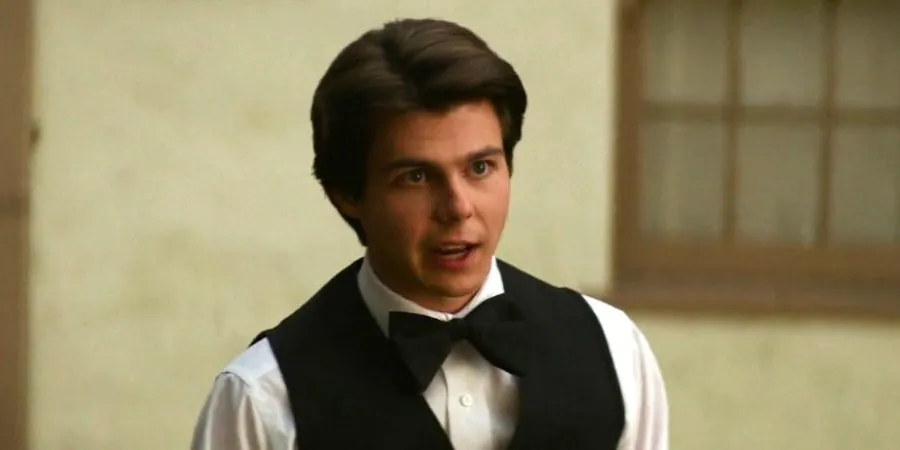
Now, we have to talk about the scene. You know the one. “I’m gonna make him an offer he can’t refuse.” The severed horse head in the bed of studio head Jack Woltz is one of the most shocking and iconic moments in cinema history. Urban legend has long attributed the acquisition of that prop to Eddie Kurland. In The Offer, the character played by Nicholas Petroccione is seen driving to a dog food plant to retrieve the head of a horse that had just been slaughtered.
So, is it true? Did Eddie Kurland really drive around with a bloody horse head in his trunk? According to production lore and various biographical accounts, yes—or at least, someone very much like him did. Reports indicate that Kurland was indeed the man tasked with calling slaughterhouses and dog food companies. He sourced the head from a plant in New Jersey, wrapped it in a bag, and drove it back to the set . It was a morbid, disgusting, and technically complex task. Transporting a severed animal head without ruining the car or getting arrested required a cool head. Kurland’s ability to handle the disgusting and the difficult solidified his reputation as the guy who got things done.
Breaking Down the Character in “The Offer”
The 2022 Paramount+ miniseries The Offer brought the story of Eddie Kurland to a massive audience for the first time . In the show, Eddie is portrayed as a young, eager film student type who literally walks up to Ruddy on the Paramount lot and asks for a job. This is where the line between fact and fiction blurs. It makes for a great narrative—the young protege mirroring Ruddy’s own start with Robert Evans.
However, the historical reality is slightly different. Contrary to the show’s timeline, Eddie Kurland was not a random kid discovered on the lot during The Godfather. He was already an established professional in his 30s who had worked with Ruddy prior to The Godfather. The showrunners likely merged timelines and characters to create a compelling mentorship arc. But here is what the show got right: the loyalty. The real Eddie Kurland was intensely loyal to Ruddy. He followed him from The Godfather to The Longest Yard and beyond. The show captures that “ride or die” energy perfectly, even if it compressed the timeline for dramatic TV.
Life After The Godfather
Don’t think that Eddie Kurland was a one-hit wonder. Once The Godfather wrapped (and became the highest-grossing film of its time), Kurland stayed glued to Ruddy’s side. The 1970s were a productive era for the duo. Kurland served as an associate producer on the 1974 classic The Longest Yard starring Burt Reynolds. This film was a massive hit, proving that Ruddy and Kurland weren’t just a fluke—they knew how to capture lightning in a bottle twice.
He also worked on the 1976 Frank Sinatra thriller The First Deadly Sin. His resume expanded beyond Ruddy as well; he contributed to films like Rumble Fish and The Cotton Club, showing that his skills as a production manager and producer were highly sought after regardless of the director in the chair. He wasn’t just Al Ruddy’s assistant; he was a legitimate Hollywood producer in his own right, just one who preferred to stay in the engine room rather than on the deck.
Director, Writer, and Renaissance Man
While producing was his bread and butter, Eddie Kurland was not a one-trick pony. Later in his career, he stretched his legs into directing and writing. He directed several documentary films in the 1970s and 80s, turning his journalistic eye toward real-world subjects. He also tried his hand at songwriting—yes, songwriting. For films like The Killer and The Killer Gun, Kurland contributed musical tracks, demonstrating that creativity wasn’t just for the directors on his payroll.
He also worked as a creative director for major studios later in life, consulting on advertising and marketing for massive blockbusters, including the Harry Potter series and Batman Begins. The man understood the full cycle of Hollywood: how to make the movie, how to market the movie, and how to keep the budget in check. This versatility made him a legend in the back offices, even if his face wasn’t on the posters.
The Man Behind the Scenes: Personal Life
When the cameras stopped rolling, Eddie Kurland valued his privacy. He was born to Leslie and Renee Kurland in New York. His mother was an artist, and his father worked as an actor and accountant—a mix that perhaps explains Eddie’s dual interest in art and business.
He married Maria Fernández, an architect and interior designer, and together they raised two children, Isabella and Sebastian, in Los Angeles. While Hollywood is often a place of burned-out stars and broken homes, Kurland managed to keep his family life stable and out of the tabloids. Unlike the chaotic characters he helped put on screen, Kurland seemed to prefer a quiet dinner at home to a wild Hollywood party. It is this contrast that makes him fascinating. He thrived in the chaos of production but craved the peace of privacy.
Later Career and Unfinished Business
As he moved into his 60s, Eddie Kurland became a mentor himself. He taught at universities like USC and UC, passing on the gritty realities of production to film students who were often more interested in auteur theory than in parking permits. He would teach them that a great script means nothing if you can’t feed the crew on time.
He remained active well into the 2000s, taking on consulting roles and contributing to independent films. He even co-produced projects with his old friend Al Ruddy later in life, including work on The Offer‘s subject matter itself, though sadly, he wouldn’t live to see the show’s premiere. He was a man who had seen the industry shift from the Golden Age of studios to the era of the tentpole franchise. Through it all, he adapted. He never stopped working because, for him, producing wasn’t a job; it was a way of solving puzzles.
The Legacy and Passing of a Hollywood Soldier
Eddie Kurland passed away on April 4, 2009, at the age of 74 due to a heart attack. The news didn’t shut down Hollywood. There were no flags flown at half-mast. But within the production community, there was a deep sense of loss. He was a bridge to a lost era—a time when producers were tough guys who carried cash in their pockets and solved problems with a handshake.
His legacy is complex. He didn’t leave behind a signature visual style or a famous quote. He left behind a lot of finished films. He left behind the legacy of The Godfather itself. Without the logistical backbone that Kurland provided, the chaos on set might have swallowed the production whole. He is proof that cinema is a team sport. The star gets the applause, but the Eddie Kurlands of the world get the credit where it matters most: in the bank accounts and the gratitude of the directors who could sleep at night knowing the details were handled.
Comparing the Kurlands: Producer vs. Performer
It is worth taking a moment to double back to the name confusion, because it actually helps define Eddie Kurland better. If we look at Eddie Kirkland (the musician), his life was public, loud, and rhythmic. He was all about expression. He died on a highway, fittingly, still in motion.
If we look at Eddie Kurland (the producer), his life was private, quiet, and strategic. He was all about control. He died of natural causes after a career of mastering the machine. One danced on stage; one danced around studio politics. Both are American originals. But for the film fan watching The Offer or rewatching The Godfather for the hundredth time, it is Eddie Kurland, the producer, who deserves a nod of respect. He is the ghost in the machine.
Why His Story Matters for Young Filmmakers
If you are an aspiring filmmaker, the story of Eddie Kurland is actually more useful to you than the story of a director like Coppola or a producer like Ruddy. Why? Because you probably aren’t a genius. (No offense, most of us aren’t. But you can be a hard worker. Kurland didn’t write the Godfather script; he secured the horse head. He didn’t direct Marlon Brando; he made sure the sets were built.
His life teaches us that there is a massive, rewarding career in being the “Indispensable Number Two.” You don’t need to be the loudest voice in the room. You need to be the most reliable. Kurland built a 50-year career, worked with icons, and made millions, all without ever facing the paparazzi. For every film student who dreams of being the next Tarantino, there should be ten who dream of being the next Eddie Kurland—the backbone of Hollywood.
Conclusion
In the grand cathedral of cinema, the statues are reserved for the directors and the stars. But the walls are held up by the producers, the assistants, the logistics managers—the Eddies. Eddie Kurland was a quintessential figure of old Hollywood. He was tough, efficient, and loyal. He lived through the transition from the studio system to the indie boom, and he handled it all with the calm demeanor of a man who had to once drive a severed horse head across town.
While The Offer may have taken dramatic liberties with his youth, the spirit of the character is true: Eddie was the safe pair of hands. Whether you are a film buff trying to understand the credits or a student looking for a role model, look no further than the quiet associate producer. Next time you watch The Godfather and see that horse head, don’t just think of Coppola or Puzo. Think of Eddie Kurland, the man who literally brought the horror to the bedroom.
FAQ
Was Eddie Kurland a real person or just a character in The Offer?
Eddie Kurland was absolutely a real person. He was an associate producer on The Godfather and a long-time collaborator of Albert S. Ruddy. However, the series The Offer took some creative liberties with his introduction, depicting him as a young aspiring filmmaker discovered on the Paramount lot, whereas in reality, Kurland was older and had already worked with Ruddy before The Godfather.
Did Eddie Kurland really get the horse head for The Godfather?
Yes, according to production records and interviews, Eddie Kurland was indeed the person tasked with acquiring the infamous horse head. He contacted a dog food company that slaughtered horses, secured the head, and transported it to the set. It remains one of the wildest “behind the scenes” stories in film history.
What is the difference between Eddie Kurland and Eddie Kirkland?
This is a common point of confusion. Eddie Kirkland (with a “k”) was a famous Jamaican-American blues musician who played with John Lee Hooker. Eddie Kurland (with a “u”) was a Hollywood film producer and associate producer known for The Godfather. They are two distinct individuals from different industries.
How did Eddie Kurland die?
Eddie Kurland passed away on April 4, 2009, at the age of 74 due to a heart attack. He is survived by his wife, Maria Fernández, and their children .
What other movies did Eddie Kurland work on?
Besides The Godfather, Eddie Kurland worked on The Longest Yard (1974), The First Deadly Sin, Rumble Fish, The Cotton Club, and Under Siege, among many others. He later moved into creative consulting for major franchises like Harry Potter and Batman.