
Introduction
abu mazen is one of the most recognizable names in modern Palestinian politics. Better known internationally by his formal name, Mahmoud Abbas, he has spent decades at the center of Palestinian diplomacy, political negotiations, and the long-running search for a solution to the Israeli-Palestinian conflict. The name “Abu Mazen” is his traditional Arabic kunya, meaning “father of Mazen,” referring to his eldest son.
Born in Safed in 1935, Mahmoud Abbas experienced displacement as a young teenager when his family left their home during the 1948 Arab-Israeli war and became refugees in Syria. That experience formed part of the background to a political career that would eventually take him from student activism and Fatah organizing to the highest levels of Palestinian leadership. As of August 2026, Abbas remains president of the Palestinian Authority and chairman of Fatah.
| Quick Fact | Details |
|---|---|
| Full Name | Mahmoud Rida Abbas |
| Popular Name | abu mazen / Abu Mazen |
| Arabic Name | محمود عباس |
| Date of Birth | November 15, 1935 |
| Age | 90 years old as of August 2026 |
| Birthplace | Safed, Mandatory Palestine |
| Nationality | Palestinian |
| Political Party | Fatah |
| Known For | Palestinian political leadership and diplomacy |
| Major Organization | Palestine Liberation Organization |
| Former Position | Prime Minister of the Palestinian Authority |
| Current Position | President of the Palestinian Authority |
| Education | Law degree and postgraduate studies |
| Wife | Amina Abbas |
| Children | Three sons: Mazen, Yasser and Tareq |
| Political Approach | Negotiations and a two-state solution |
Who Is abu mazen?
abu mazen is the commonly used name of Mahmoud Abbas, a senior Palestinian politician who has played an important role in Palestinian affairs for more than half a century. He became deeply involved with Fatah, the Palestinian nationalist movement that later became the dominant organization within the Palestine Liberation Organization, or PLO.
Following the death of longtime Palestinian leader Yasser Arafat in 2004, Abbas emerged as one of the most influential figures in Palestinian politics. He became chairman of the PLO and was elected president of the Palestinian Authority in January 2005. His original presidential mandate later expired, but no subsequent presidential election was held, and he continued to exercise the office.
Unlike Palestinian groups that emphasize armed confrontation, Abbas has generally promoted political negotiations and diplomatic engagement. His commitment to negotiations and the concept of two states has been a defining feature of his international political identity.
Early Life and Background
abu mazen was born Mahmoud Rida Abbas on November 15, 1935, in Safed, a city in what was then Mandatory Palestine. His childhood changed dramatically in 1948. At the age of 13, he and his family left Safed and became refugees in Syria during the conflict surrounding the establishment of Israel.
Life as a refugee reportedly required him to work while continuing his education. According to his official biography, Abbas studied while helping support his family and eventually completed high school before pursuing higher education.
He studied law at Damascus University and completed his degree in 1958. He later pursued advanced academic studies in Moscow and received a doctorate in 1982.
His academic work later became controversial because of claims and arguments concerning Zionism, Nazi Germany and the Holocaust. Abbas has faced repeated international criticism over statements concerning Jewish history and the Holocaust. In 2018, after remarks widely condemned as antisemitic, he issued an apology and said that he condemned antisemitism and regarded the Holocaust as one of history’s most terrible crimes. Further remarks in 2023 were again condemned by the United States and European Union as historically false and misleading.
His Age and Physical Features
Born on November 15, 1935, abu mazen is 90 years old as of August 2026. He will turn 91 in November 2026. His age has increasingly become part of discussions about the future leadership and succession of the Palestinian Authority and Fatah. Reuters reported in May 2026 that Abbas remained chairman of Fatah while questions about his eventual successor continued.
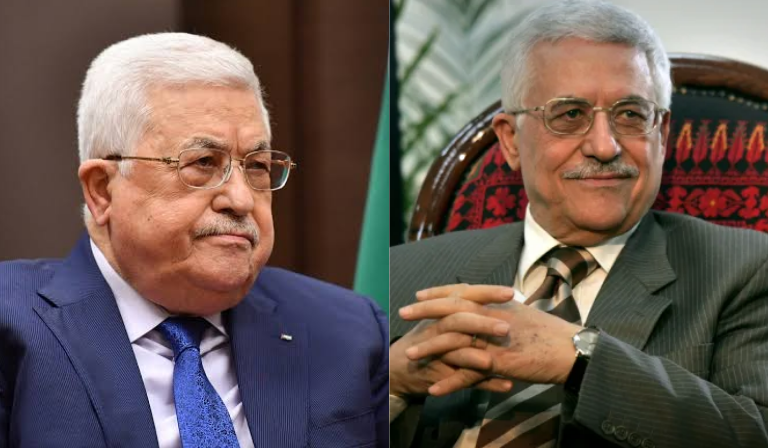
Abbas is generally recognized publicly by his white hair, formal appearance and preference for traditional diplomatic business attire during official events. Reliable sources do not consistently document his exact height, weight or other measurements, so figures circulating on celebrity-style biography websites should not be treated as established facts.
His advanced age has also led to periodic discussion about his health and the future of Palestinian leadership. Such questions have become politically important because there has not been another Palestinian presidential election since Abbas was elected in 2005.
Career and Major Achievements
The political career of abu mazen began long before he became president. His official biography states that he became politically active during the 1950s and participated in early organizational activities connected with the development of Fatah.
Over the following decades, Abbas gained prominence within Palestinian political institutions. He became closely associated with diplomatic efforts and contacts with Israelis who supported negotiation. This approach helped distinguish him as a political figure more focused on diplomacy than military confrontation.
One of the defining achievements of his career was his role in the peace process that produced the Oslo Accords. Abbas was an important Palestinian participant in the negotiations and represented the PLO during the signing of the agreement in Washington in September 1993. He later represented the PLO in connection with the Oslo II agreement in 1995.
In 2003, Abbas became the first prime minister of the Palestinian Authority. His tenure was short, however, and he resigned later that year amid disagreements and political difficulties involving Yasser Arafat, Israel and the United States.
After Arafat’s death in 2004, Abbas became chairman of the PLO and rose to the top of the Palestinian political establishment. In January 2005, he was elected president of the Palestinian Authority.
Another important diplomatic milestone occurred under his leadership at the United Nations. In 2011, the Palestinians submitted an application for full UN membership. In November 2012, the UN General Assembly granted Palestine non-member observer State status through Resolution 67/19.
Relationship with Yasser Arafat and the Peace Process
The relationship between abu mazen and Yasser Arafat was central to Abbas’s political development. Both men became leading figures within Fatah and the PLO, but they did not always agree on political authority or strategy.
Abbas was frequently associated with negotiation and diplomatic contact. He became one of the leading Palestinian figures behind the Oslo process, while Arafat remained the dominant symbolic and political leader of the Palestinian national movement.
Their differences became particularly visible in 2003 when Abbas served as prime minister under Arafat. Disagreements over authority and security responsibilities contributed to Abbas leaving the position after only a few months.
Following Arafat’s death, Abbas inherited responsibility for leading Palestinian institutions during a period of major political division. His continued preference for negotiation rather than armed struggle shaped his relations with Israel, Western governments and other Palestinian organizations.
Marriage and Family Life
abu mazen is married to Amina Abbas. The couple had three sons: Mazen, Yasser and Tareq. His eldest son, Mazen, died in 2002. The traditional name Abu Mazen literally identifies Abbas as the “father of Mazen.”
His sons Yasser and Tareq have been involved in business, and their activities have occasionally attracted political and media scrutiny. Reuters reported in 2026 that Yasser Abbas is a businessman involved in tobacco and contracting businesses in the West Bank.
In May 2026, Yasser also moved further into formal politics by winning a position on Fatah’s Central Committee. The development generated speculation about succession, although there was no confirmed decision establishing him as his father’s eventual political successor.
Social Media Presence
Unlike younger politicians and public figures who build highly personal brands through social media, abu mazen has maintained a much more institutional public presence.
Information about his speeches, meetings, diplomatic activities and political statements is generally distributed through official Palestinian presidency channels, government communications and major news organizations. His public image therefore depends more heavily on formal political communication than celebrity-style personal posting.
This approach fits his political generation and position. His communication typically centers on diplomacy, Palestinian statehood, international meetings, the United Nations and developments involving the West Bank, Gaza and Israel rather than personal lifestyle content.
Personality and Interests
Because abu mazen is primarily known through political life, reliable information about his private hobbies and everyday personal interests is relatively limited.
Publicly, he has developed a reputation as a politician who prefers negotiation, institutional diplomacy and international engagement. His willingness to pursue discussions with Israeli representatives and peace organizations dates back decades.
Abbas is also an author. His official biography lists numerous publications dealing mainly with Palestinian politics, negotiations, Zionism, Israel and the Oslo process. These works reflect his long-standing interest in political history and the Palestinian-Israeli conflict.
His political style has nevertheless attracted very different interpretations. Supporters have presented him as a pragmatic advocate of diplomacy, while critics accuse his administration of concentrating political power and failing to renew democratic institutions.
Does abu mazen Have Children?
Yes. abu mazen and his wife Amina had three sons: Mazen, Yasser and Tareq.
Mazen, his eldest son and the person from whom the name “Abu Mazen” originates, died in 2002. Yasser and Tareq later became known for their business activities.
Yasser Abbas attracted increased public attention in 2026 when he entered Fatah’s senior leadership structure. Reuters reported that he won a seat on the Fatah Central Committee during the party’s conference in May 2026.
Net Worth and Income
There is no reliably verified public figure for abu mazen’s personal net worth.
Various websites, commentators and political opponents have published estimates over the years, sometimes claiming extremely large sums. However, those estimates are not supported by a transparent, independently audited public disclosure of Abbas’s personal assets.
For that reason, presenting a specific figure such as $100 million or another widely repeated estimate as confirmed fact would be misleading.
Much of the controversy surrounding the family’s finances has instead centered on the business interests of Abbas’s sons. Reuters has reported allegations that Yasser and Tareq benefited from their political connections, allegations that the brothers have denied.
For an accurate biography, the safest conclusion is that abu mazen’s precise net worth remains publicly unverified.
Public Image and Legacy
The legacy of abu mazen is complex and heavily debated.
Supporters often point to his preference for negotiations, his role in the Oslo peace process and his efforts to win greater international recognition for Palestinian statehood. His decades of diplomatic activity made him a familiar figure at the United Nations and in meetings with governments around the world.
The 2012 elevation of Palestine to non-member observer State status at the United Nations was an important diplomatic development during his leadership.
Critics, however, focus heavily on the absence of national presidential elections since 2005. Abbas was elected to a four-year term, but his mandate expired and he remained in office. His administration has also been criticized over governance, political freedoms and the Palestinian Authority’s security cooperation with Israel.
The division between Fatah and Hamas has further complicated his legacy. Hamas seized control of Gaza in 2007, leaving the Palestinian political system geographically and institutionally divided. Abbas’s effective authority has consequently been concentrated in Palestinian Authority-administered parts of the West Bank.
His controversial remarks about Jewish history and the Holocaust have also damaged his international reputation and repeatedly generated condemnation from Western governments and Jewish organizations.
As a result, assessing his legacy requires recognizing both his major diplomatic role and the serious political controversies surrounding his long presidency.
Conclusion
The story of abu mazen is closely connected to the modern political history of the Palestinian people. From displacement as a child and university studies in Damascus to Fatah activism, the Oslo negotiations and eventually the Palestinian presidency, Mahmoud Abbas has spent most of his adult life inside Palestinian political institutions.
His strongest historical association is likely to remain diplomacy. He helped shape the Oslo peace process, became the successor to Yasser Arafat and supported international efforts to advance recognition of Palestinian statehood.
At the same time, his extraordinarily long tenure, lack of renewed presidential elections, political divisions with Hamas, controversies surrounding governance and disputed remarks about Jewish history have made him a deeply contested figure.
As of August 2026, the 90-year-old abu mazen remains a central figure in Palestinian politics, while debate about succession and the future direction of Palestinian leadership continues.
8 FAQs About abu mazen
1. Who is abu mazen?
abu mazen is the commonly used Arabic kunya of Mahmoud Abbas, the Palestinian politician who has served as president of the Palestinian Authority since 2005 and has held senior leadership positions in Fatah and the PLO.
2. What is the real name of abu mazen?
His full name is Mahmoud Rida Abbas. He is widely known internationally as Mahmoud Abbas.
3. How old is abu mazen?
He was born on November 15, 1935. Therefore, he is 90 years old as of August 2026 and is due to turn 91 in November 2026.
4. Why is Mahmoud Abbas called Abu Mazen?
The name means “father of Mazen.” Mazen was Abbas’s eldest son. Using a kunya based on a child’s name is a long-standing naming tradition in Arab societies.
5. Is abu mazen married?
Yes. Mahmoud Abbas is married to Amina Abbas, and they had three sons: Mazen, Yasser and Tareq.
6. What is abu mazen known for?
He is best known for his leadership of the Palestinian Authority, his senior role in Fatah and the PLO, his involvement in the Oslo peace process and his support for a negotiated two-state solution.
7. What is abu mazen’s net worth?
His exact personal net worth has not been reliably established through publicly available, independently audited financial disclosures. Estimates circulating online should therefore be treated cautiously.
8. Is abu mazen still president?
Yes. As of August 2026, Mahmoud Abbas remains Palestinian president and chairman of Fatah. Reuters reported in May 2026 that the 90-year-old Abbas would remain Fatah chairman while discussions about eventual succession continued.