You might have heard the name Eduardo Tamayo thrown around recently, but the funny thing is, people are usually talking about two entirely different people. It is one of those unique cases where a name carries two completely distinct legacies. On one side, you have a national hero from South America, a living legend of Chilean rodeo. On the other, you have a quiet American businessman who briefly stepped into the political spotlight due to a high-profile marriage. This article is your guide to both.
We are going to dive deep into the lives of these individuals. Whether you are a sports fan looking for stats, a history buff curious about political scandals, or just someone who saw the name trending online, we have you covered. Understanding the difference between these two figures is key, as mixing them up is a common mistake. We will look at the “Champion” and the “Ex-Husband,” exploring their backgrounds, their rise to fame (or infamy), and where they are today. By the end, you will have a crystal-clear picture of the two distinct narratives surrounding the name Eduardo Tamayo.
The Chilean Champion: A Rodeo Legend
When you talk to fans of Chilean rodeo, there is a reverence when they mention Eduardo Tamayo Ordenes. This is the original “Lalo,” a man whose name is written in gold letters in the history of Chile’s national sport. We aren’t talking about a flash in the pan; we are talking about a dynasty. This Eduardo Tamayo represents grit, tradition, and a deep connection to the Chilean countryside. For over four decades, he dominated the medialuna (the rodeo arena) with a skill that left audiences in awe. He is not just a participant; he is a standard-bearer for the sport, inspiring generations of younger riders to pick up the reins.
Early Life and the Making of a Horseman
Born in Parral, Chile, in 1949, Eduardo Tamayo Ordenes grew up immersed in the huaso culture—the traditional Chilean cowboy. This wasn’t just a hobby; it was a way of life. From a very young age, he learned that the partnership between a rider and his horse is sacred. The precise date is often debated between September 11 and October 11, 1949, but what is not debated is the natural talent that emerged from the Maule Region. He didn’t just learn to ride; he learned to think like a horse, predicting movements and understanding the psychology of the animal and the steer.
The Rise to National Fame
Eduardo Tamayo’s first breakthrough came in the 1976-1977 season. Partnering with Samuel Parot, a giant of the sport at the time, he captured his first Campeonato Nacional (National Championship). This victory was not just a win; it was a masterclass. Riding “Guariqueque” and “Desiderio,” they scored 27 points, announcing to the world that a new star had arrived. This early success taught him the value of a strong dupla (team), a lesson he would carry throughout his career. Learning from Parot gave him the technical foundation to refine his aggressive yet precise style.
The Unstoppable Dupla with Juan Carlos Loaiza
While his early career was impressive, the golden era of Eduardo Tamayo began in 1992 when he started riding alongside Juan Carlos Loaiza. This partnership became the most feared combination in the sport. Together, they seemed to move as one mind. Their chemistry was undeniable, leading to an explosion of titles. They quickly established the Criadero Santa Isabel as a powerhouse, winning championships in 1994, 2000, 2002, and 2007 . Their ability to read the “atajadas” (the maneuvers to stop the steer) was pure artistry, turning a rustic skill into a sophisticated athletic event.
The Historic Seven National Titles
One of the most common points of confusion surrounding this athlete is the exact number of his wins. Early records show him celebrating his fifth title, but history shows he didn’t stop there. The legendary Eduardo Tamayo didn’t just win five times; he kept pushing the limits. In 2012, he secured his sixth championship, and in 2014, at an age when most athletes have long since retired, he did the unthinkable: he won his seventh Chilean National Championship .
With this seventh title, he matched the legendary record set by Ramón Cardemil, a feat many thought would never be equaled. Riding “Dulzura” and “Delicada” to a score of 38 points, he proved that age is just a number . This achievement cemented his status not just as a great rider, but as a deity of the sport. He didn’t just participate in history; he rewrote it, showing incredible physical and mental endurance across six decades of competition.
The Spanish Politician: The “Tamayazo” Scandal
Shifting gears completely, the name Eduardo Tamayo takes a dark turn in the world of Spanish politics. If you ask a Madrilenian about the name, they likely won’t think of horses; they will think of betrayal. This refers to Eduardo Tamayo (full name Eduardo Tamayo y Tamayo), a former Spanish politician of the PSOE (Spanish Socialist Workers’ Party). His name is forever linked to one of the most infamous political maneuvers in recent Spanish history, an event so scandalous it earned its own moniker: the “Tamayazo.”
The 2003 Madrid Election Crisis
To understand the “Tamayazo,” we need to rewind to the Madrid regional elections of May 2003. The results were incredibly tight. The People’s Party (PP) won the most individual votes, securing 55 seats. However, the left-wing coalition of PSOE (47 seats) and Izquierda Unida (9 seats) mathematically had a majority, totaling 56 seats . Rafael Simancas of the PSOE was poised to become the next president of the Community of Madrid. It seemed like a done deal. The math was simple, and the coalition was ready to govern.
The Infamous Vote that Shocked Spain
The day of the investiture vote arrived on June 10, 2003. The tension in the Asamblea de Madrid was palpable. Everyone expected Simancas to win. But when the votes were cast, chaos erupted. Two PSOE deputies, Eduardo Tamayo and María Teresa Sáez, failed to show up to vote. Worse, they didn’t just abstain; they deliberately didn’t attend. By breaking party discipline, they denied the PSOE-IU coalition the majority it needed. Without their votes, Simancas could not be elected. The political earthquake sent shockwaves through the country, as a stable government crumbled due to the actions of two rogue members .
Aftermath and Political Consequences
The immediate aftermath was a disaster for the left. New elections had to be called for October 2003. This time, the PP campaigned heavily on the instability of the left. Esperanza Aguirre swept to power with an absolute majority, a position the PP would hold for years. Eduardo Tamayo and Sáez claimed they acted because they opposed a pact with IU, but rumors of corruption and pressure from business groups swirled endlessly . The “Tamayazo” became a textbook example of political transfuguismo (political defection or crossing the floor), a stain on Spanish democracy that is still referenced whenever a tight election occurs.
The American Ex-Husband: Life with Tulsi Gabbard
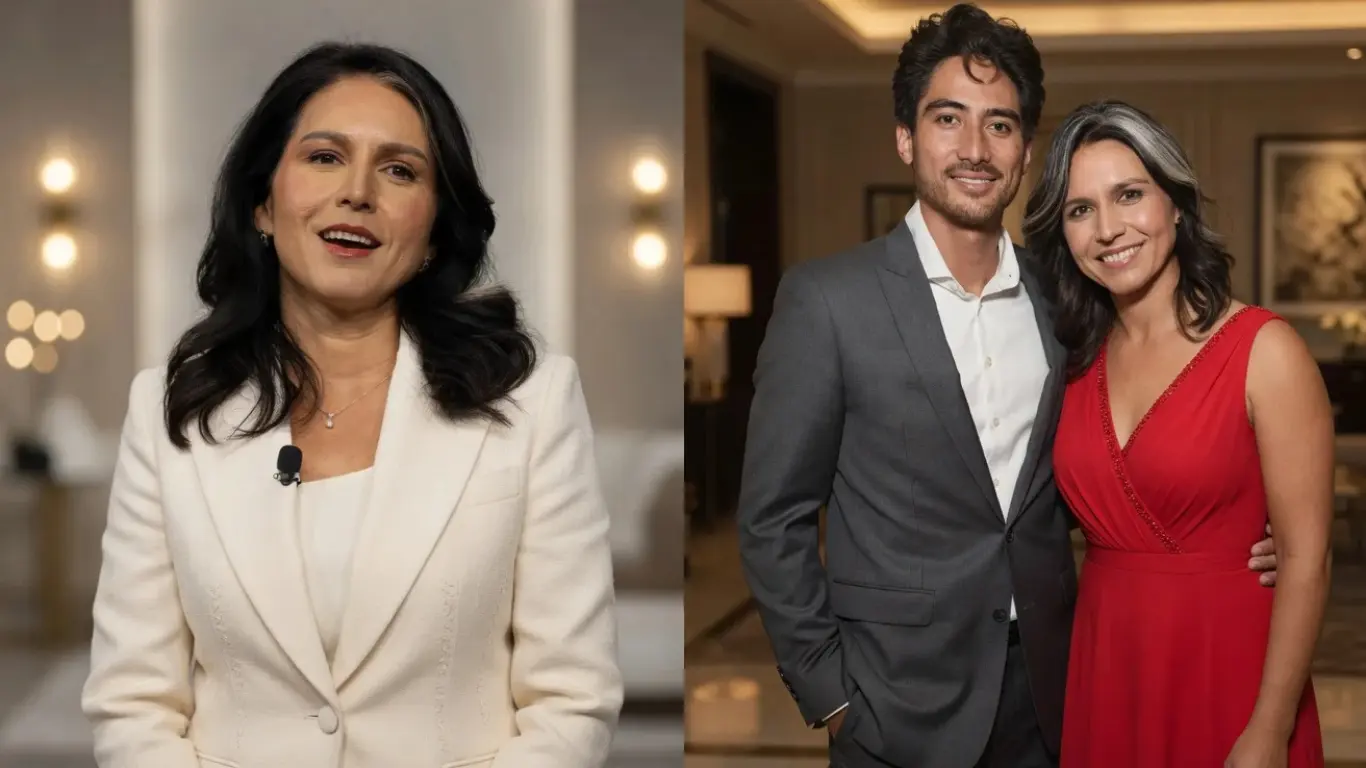
Finally, we arrive at the most searched version of the name in recent years: Eduardo Tamayo, the first husband of former US Representative and presidential candidate Tulsi Gabbard. Unlike the politician or the rodeo star, this Eduardo Tamayo prefers the shadows. He is a private citizen who never asked for fame, yet he was thrust into the national conversation simply because he fell in love with a rising star in American politics.
A Childhood Romance in Hawaii
Eduardo Tamayo (believed to be born in 1981) grew up in Hawaii, specifically in American Samoa, before moving to the islands. He was a childhood friend of Tulsi Gabbard. Their relationship was not a whirlwind Hollywood romance; it was a slow burn of friendship turning into love. They grew up together, sharing the unique culture of the islands and close family ties. Because he is intensely private, details about his education or early business ventures are scarce, but it is known that he is a successful businessman in Hawaii, staying grounded while Tulsi’s star began to rise in the Democratic Party.
The Short-Lived Marriage
The couple married in 2002. It was a small, intimate ceremony, keeping with their low-key personal style. At the time, Tulsi Gabbard was already making waves in politics, though she hadn’t yet reached Congress. For a brief period, they seemed like a stable, power-couple-in-the-making. However, the pressures of public service were about to test their bond in a way neither might have anticipated. Just four years later, in 2006, the marriage ended in divorce .
Challenges of Deployment and Separation
Why did the marriage fail? Unlike many celebrity splits marred by scandal, the separation of Tulsi Gabbard and Eduardo Tamayo was attributed to the immense strain of military deployment. Shortly after their wedding, Gabbard deployed to Iraq for 18 months with the Army National Guard. The stress of being apart for that length of time, combined with the intense trauma and pressure of war, fractured the relationship . Upon her return, they realized they had grown into different people. Gabbard has often spoken about how the experience changed her, and unfortunately, it ended her marriage.
Life After Divorce and Moving On
After the divorce was finalized in June 2006, Eduardo Tamayo did exactly what you would expect from a man who hates the spotlight: he vanished from it. He returned to his private life in Hawaii, presumably continuing his business interests. He did not give tell-all interviews or write books. Meanwhile, Tulsi Gabbard eventually remarried in 2015 to Abraham Williams, a cinematographer. She also kept the “Tamayo” last name for a significant period after the divorce, citing that it felt odd to change such a personal identifier, though she eventually transitioned back to Gabbard.
Eduardo Tamayo Belda: The Historian
We cannot ignore a fourth, quieter entry in the index of notable figures. There is also Eduardo Tamayo Belda, a Spanish historian and academic. Born in Madrid in 1984, he represents the scholarly side of the name. Unlike the politician (scandal) and the athlete (fame), Eduardo Tamayo contributes to the world through research and education.
An Academic Focused on International Relations
This Eduardo Tamayo is a Historian from the Universidad Autónoma de Madrid (UAM) and holds a Master’s in Political Science from Paraguay. He is deeply involved in the academic world, focusing on contemporary history and international relations, specifically the ties between Spain and Paraguay . He works as a professor and a researcher, often traveling between Europe and South America for conferences and lectures. He is a member of several prestigious historical associations and contributes to scientific journals.
Distinguishing the Scholar
If you are looking for published works or political analysis, Eduardo Tamayo Belda is your guy. He represents the intellectual pursuit of knowledge, a stark contrast to the physical prowess of the Chilean rider or the political maneuvering of the Spanish politician. He is currently involved in doctoral research, further cementing his legacy as an academic. For those conducting deep research into Hispanic-Paraguayan relations, his writings are a vital resource.
Eduardo Tamayo Custode: The Fighter
The final, and perhaps most niche, entry on this list is Eduardo Andres Tamayo Custode . Known in the ring as “Jacare,” this is a professional mixed martial artist. This Eduardo Tamayo competes in the lightweight division, making a name for himself in the brutal world of combat sports.
A Career in the Cage
While not a global superstar like Conor McGregor, Eduardo Tamayo Custode has shown grit inside the cage. Competing primarily in South America, his record reflects the tough, grinding nature of regional circuits. With wins coming via submission and decision, he showcases a versatile skill set, comfortable both on the ground and standing up. He represents the fighting spirit, proving that the name Tamayo is present in the world of athletic combat as well.
Conclusion
Navigating the world of public figures can be tricky when names overlap, but the story of Eduardo Tamayo is a fascinating case study in diversity. From the dusty thrill of the Chilean medialuna to the tense floor of the Madrid assembly, from the quiet beaches of Hawaii to the hallowed halls of a Spanish university, this name has truly done it all. It is a reminder that a name is just a starting point; the life lived behind it is what truly defines a person.
Frequently Asked Questions
Is Eduardo Tamayo related to Tulsi Gabbard?
Yes, there is an Eduardo Tamayo who was married to former Congresswoman Tulsi Gabbard. This Eduardo Tamayo is an American businessman from Hawaii. They were childhood friends who married in 2002 but divorced in 2006, citing the strains of her military deployment to Iraq. It is important to note that this is not the same person as the Chilean rodeo champion.
How many championships did the Chilean Eduardo Tamayo win?
The legendary Chilean horseman Eduardo Tamayo Ordenes is a seven-time National Champion of Chilean Rodeo. While some older records show him with five titles, he continued competing and winning at an elite level, eventually securing his seventh and final title in 2014, matching the record. He is widely considered one of the greatest riders in the history of the sport.
What is the “Tamayazo” in Spanish politics?
The “Tamayazo” refers to a political scandal in 2003 involving a Spanish politician named Eduardo Tamayo. He was a PSOE deputy who, along with a colleague, failed to vote in the investiture for the President of Madrid. Their absence denied the left-wing coalition a majority, forcing a new election which the right-wing PP won. It is a classic case of political betrayal or “transfuguismo.”
Are there multiple famous people named Eduardo Tamayo?
Absolutely. There are at least five distinct public figures with this name. The most prominent are the Chilean rodeo champion (Eduardo Tamayo Ordenes), the American ex-husband of Tulsi Gabbard, the Spanish politician involved in the “Tamayazo,” a Spanish historian (Eduardo Tamayo Belda), and an MMA fighter (Eduardo Tamayo Custode).
Did Tulsi Gabbard keep the name Tamayo after divorce?
Yes, Tulsi Gabbard kept the surname Tamayo for several years after her divorce from Eduardo Tamayo. She has stated in interviews that she kept it because it felt strange to change her name back immediately, as she had built a political identity under that name. She has since reverted to using her maiden name, Gabbard.