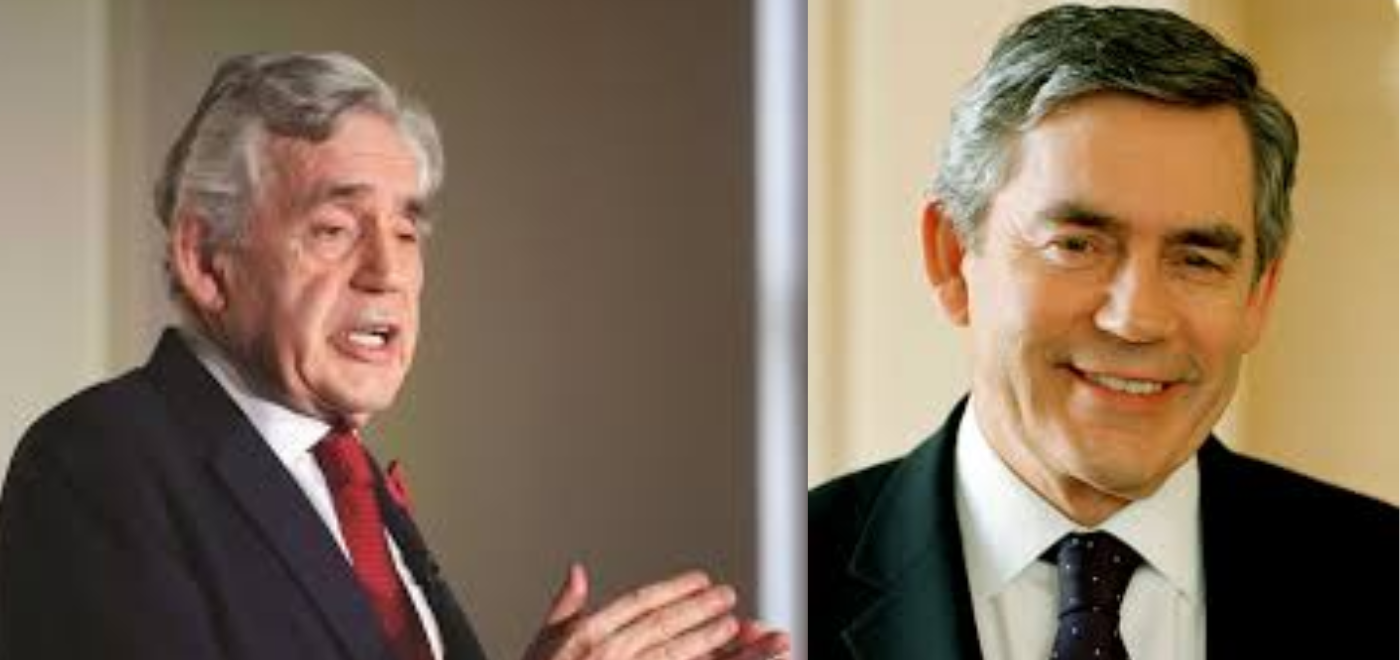
You probably recognise the name. Maybe you remember the jawline, the serious demeanour, or the specific cadence of his speeches. For better or worse, the political identity of the United Kingdom was shaped dramatically by this one figure. While he is often discussed as the man who followed Tony Blair, to view him only through that lens is to miss the point entirely. He was, for a decade, the most powerful Chancellor in modern British history, and he was the Prime Minister who stood between the global banking system and total collapse.
But here is where the story gets interesting. As of May 2026, this seasoned politician is back. In a surprising move that sent ripples through Westminster, Prime Minister Keir Starmer appointed the former Labour leader as a special envoy on global finance and cooperation. It is a role that feels almost prophetic, given his past. Gordon Brown This isn’t just a nostalgia trip for the Labour party; it is a strategic play to bring serious economic firepower back into the room.
We are going to take a long, relaxed stroll through his life. We will look at the “Iron Chancellor” who gave us independence for the Bank of England, the “Reluctant PM” who faced the Great Recession, and the “Elder Statesman” who is now advising on how to fix a fractured world. Whether you are a student of politics, a history buff, or just someone trying to understand why your economy looks the way it does today, this is the full story.
The Boy from Kirkcaldy: Forging a Serious Mind
To understand the politician, we have to start in Scotland. He was born in Giffnock, but it was the industrial town of Kirkcaldy in Fife that raised him. His father was a minister, which meant he was raised in a manse—a household deeply connected to community service and moral philosophy. You can hear that Presbyterian influence in his speeches; there was always a moral gravity, a sense that economics wasn’t just about numbers, but about “justice.”
And here is a fun fact that often surprises people: he was a bit of a prodigy. He started at the University of Edinburgh at the ridiculously young age of sixteen, making him one of the youngest freshers since the Second World War. But his time at university wasn’t just about books. A rugby accident left him with a detached retina, and he eventually lost the sight in that eye. He has worn glasses ever since. This is a crucial detail, not as a sob story, but because it shifted his trajectory. Suddenly, the path of an athlete was closed, and the path of an intellectual was accelerated.
He didn’t just leave with a degree; he left with a First Class honours in History. He also proved to be a natural leader, being elected Rector of the University of Edinburgh in 1972—the youngest ever to hold that post. Before entering politics, he tried his hand at television production and lecturing. But the pull of Westminster was too strong. Entering Parliament in 1983 as the MP for Dunfermline East, he walked into a building that was about to be rocked by the miners’ strikes and the rise of Thatcherism.
The Partnership and the Rivalry with Tony Blair
You cannot tell the story of gordon brown without the ghost of Tony Blair hovering in the background. Their relationship is one of the most fascinating, dysfunctional, and successful partnerships in political history. When they were both elected in 1983, the Labour Party was in the wilderness. It was stuck in the past, wearing donkey jackets, and losing elections. These two young, ambitious Scotsmen (yes, Blair was raised in Durham but went to a Scottish school) shared an office in the House of Commons.
They became friends. They made a pact. The story goes that in a restaurant in 1994, Blair—who was running for the leadership after the death of John Smith—agreed to step aside in the future to let his friend have a turn. But politics is a brutal sport. Blair became the face of “New Labour,” the slick, modernised version of the party. He was the frontman, the guitar player, the rockstar. He became the Chancellor of the Exchequer. He was the manager, the strategist, the numbers guy in the back.
For ten years, this worked beautifully. Blair won landslides because the public trusted the economy. He was the “Iron Chancellor.” While Blair charmed presidents and princesses, he was often seen as the boring one—the one who worried about the “pound in your pocket.” But that tension was always simmering. There were countless “TB-GBs” (the letters they wrote to each other) and endless briefing wars in the papers about who deserved credit for the economic boom. It is a classic tragedy of politics: a partnership that conquered the world, but a friendship that fractured under the weight of ambition.
The Longest Serving Chancellor in Modern History
Let’s talk about the numbers. He served as Chancellor from 1997 to 2007. Ten years. That is an eternity in a job where most people are lucky to last a few budgets. To this day, no one has held the post for longer in the modern era.
When he walked into the Treasury in 1997, he did something that shocked the establishment. He immediately handed over interest rate-setting powers to the Bank of England. Before that, Chancellors would fiddle with interest rates for political gain. It was a disaster. By making the Bank independent, he took the politics out of inflation. It was a masterstroke of credibility that laid the foundation for the longest period of sustained economic growth in British history.
But he wasn’t just about macroeconomics. He was also a micro-manager with a moral core. He introduced the National Minimum Wage—something the Labour left had demanded for decades. He created Sure Start centres to help disadvantaged children get a leg up. He introduced the Winter Fuel Payment and the Child Tax Credit. He also displayed a surprising streak of capitalist pragmatism. In 2002, he introduced the Small Breweries’ Relief, slashing taxes for microbreweries. That single move sparked a revolution in British beer, leading to thousands of craft breweries popping up in garages and pubs across the country. He understood that sometimes, the state needs to get out of the way to let small businesses thrive.
Of course, there were controversies. His decision to remove the tax credit on dividend payments for pension funds—often called “the Pensions Raid”—had long-term negative consequences for final salary pension schemes. And selling off a substantial portion of the UK’s gold reserves at near 20-year lows is a move that still makes traders wince today. But overall, his tenure at the Treasury was defined by stability and redistribution.
The Reluctant Prime Minister (2007-2010)
Finally, in 2007, the waiting game ended. Tony Blair stepped aside, and he walked into 10 Downing Street. It was, by many accounts, an awkward coronation. Gordon Brown had waited so long that the public had already formed its impressions of him. He wasn’t the shiny new toy; he was the “continuation.”
His early months were bumpy. He flirted with calling a snap election in 2007, then backed out—an act that made him look indecisive. Then, the world broke. The financial crisis, the collapse of Lehman Brothers, the credit crunch—it hit his doorstep. Suddenly, the man who was seen as a boring accountant became the most important pilot in the storm.
Here is where his legacy as PM is cemented. He didn’t panic, or rather, he panicked constructively. He nationalised failing banks like Northern Rock and RBS to prevent your savings from disappearing. He slashed taxes temporarily to keep money in the economy. He launched the “Banking Bailout”—controversial, expensive, and necessary. The banks were too big to fail, so the state stepped in.
But his defining moment on the world stage was the G20 Summit in London in April 2009. The world was in freefall. Protectionism was on the rise. He gathered the world’s leaders and essentially strong-armed them into agreeing to a global fiscal stimulus. They pledged over a trillion dollars to repair the global economy. Many economists believe that the summit, his summit, prevented a second Great Depression. It was a masterclass in international cooperation.
Beyond the economy, his government passed the world’s first legally binding Climate Change Act in 2008, setting ambitious targets for emission reductions. Gordon Brown also oversaw the withdrawal of British combat troops from Iraq. Yet, despite these wins, he faced a brutal political landscape. The recession meant rising debt and unemployment. By 2010, the public was tired.
The 2010 Defeat and the Wilderness Years
The 2010 General Election resulted in a hung parliament. He tried to form a coalition with the Liberal Democrats, famously calling Nick Clegg. But in the end, the Conservatives and Lib Dems formed a government. He resigned as Prime Minister shortly after.
For many, that was the end of the road. He stepped down as Labour leader and remained a backbench MP, eventually becoming the UN Special Envoy for Global Education. It is in this role that he arguably found his true voice post-Politics. He became a fierce advocate for children in conflict zones. He chaired the “Education Cannot Wait” fund, raising billions to get kids in war-torn countries into schools.
He also wrote. He wrote extensively about the Union (Scotland staying in the UK) and about “Progressive Patriotism.” He softened his public image, appearing on chat shows and revealing a dry, self-deprecating wit that was rarely seen in Westminster.Gordon Brown
The 2026 Comeback: Special Envoy for Global Finance
Now, let’s bring it to the present. Keir Starmer, the current Labour Prime Minister, is facing a tough crowd. The local elections in May 2026 were brutal for the party. The Reform UK party is surging. People are worried about the cost of living and global instability.
What does a leader do when they are under pressure? They call in the heavyweights. In a move that was announced officially on May 9, 2026, Starmer brought him back into the fold as his “Special Envoy on Global Finance and Cooperation”.
Why now? Because the world is on the edge again. We have inflation, war in Europe, and a potential trade war. Starmer needs someone who has the respect of international leaders, someone who has “been there” during the last systemic collapse, to advise on defence investments and economic security. Downing Street stated that it will “advise on how global financial cooperation can help to boost the country’s security and resilience”.
This isn’t a full-time ministerial gig (some speculate it’s unpaid), but it is a signal. It says, “The adults are back in the room.” For the Labour Party,Gordon Brown seeing the former PM return to advise Starmer is a full-circle moment. It validates the centrist, economically credible wing of the party.
A Data Snapshot: Key Facts
To help visualise the journey, here is a table breaking down his career highlights.
| Led UK through the 2008 Financial Crisis; Hosted G20 Summit; Passed Climate Change Act 2008. | Duration | Key Achievements |
|---|---|---|
| Chancellor | 1997 – 2007 | Longest-serving Chancellor; Made Bank of England independent; Introduced Minimum Wage; Gave tax breaks to small breweries. |
| Prime Minister | 2007 – 2010 | Led the UK through the 2008 Financial Crisis; Hosted the G20 Summit; Passed the Climate Change Act 2008. |
| Current Role | 2026 – Present | Appointed by Keir Starmer as Special Envoy on Global Finance to advise on security and resilience. |
Defining Quotes: The Voice of a Leader
He was often criticised for being wooden, but when he spoke from the heart, he had a profound way with words. Here are a few quotes that define his philosophy.
On Moral Purpose
“I am not a celebrity, I am not a rock star. I am a serious politician who wants to change the country.”
On the Financial Crisis
“This is no time for a novice.”
On Justice
“The true measure of a society is how it treats its children.”
On Scotland (The Referendum)
“I am a Scot… I am also a Briton. That is not a contradiction. It is a rich and powerful identity.”
Criticisms and Controversies
Of course, no deep dive would be complete without looking at the rough edges. To be fair, we have to look at the “Pensions Tax” issue. Many analysts argue that his 1997 budget, which stripped pension funds of their tax credits, is a primary reason why final salary pension schemes closed in the private sector. It raised money for the Treasury at the cost of future retirement funds.Gordon Brown
Then there is the “Big Bang” of regulation. While he saved the banks in 2008, his earlier “light-touch” regulatory regime—specifically the tripartite system between the Treasury, the Bank, and the FSA—is often blamed for failing to spot the crash coming.
And, of course, the “Blair vs. Brown” saga. The briefings, the jealousy, the leaks. For many voters, the perception that the Labour government was distracted by internal civil war tarnished its legacy.
The Personal Side: Family and Health
Politics aside, the man is a family man. He married Sarah Macaulay in 2000 in his home in North Queensferry. They have two sons. Tragically, their first daughter, Jennifer Jane, died as an infant in 2002. The couple have rarely spoken about it publicly, but it is understood to be the source of their deep commitment to child health and education charities. Sarah Brown runs the “Theirworld” charity, and he is fully involved in that ecosystem of global philanthropy.
Known for his intense work ethic (and infamous for his clashes with the Number 10 carpet cleaner who couldn’t keep up with his pacing), he is a man of habit. He loves history, he loves Scotland, and he hates losing.
Conclusion
So, what is the final verdict on gordon brown? History is often kinder to serious men than the press is. When he left office in 2010, he was widely seen as a dour failure who lost the election. But looking back from 2026, that narrative has shifted. He is increasingly recognised as the right man for a catastrophic moment.
His economic management during the 2008 crash was globally respected. His role as Chancellor built the schools and hospitals of the New Labour era. And now, as he steps back onto the world stage to help Keir Starmer navigate the choppy waters of 2026, we are reminded that experience is a currency that cannot be printed.
He proved that you don’t have to be a rock star to be a hero. Sometimes, you just have to be the one with the steady hand on the wheel when the storm hits.
FAQ: Frequently Asked Questions
Q1: What is gordon brown doing now in 2026?
As of May 2026, he has returned to frontline politics as a special envoy for Prime Minister Keir Starmer. His official title is Special Envoy on Global Finance and Cooperation. He is tasked with building international financial partnerships to boost the UK’s security, defense investments, and economic resilience following a difficult period for the Labour government.
Q2: Why is gordon brown famous?
He is famous for being the Chancellor of the Exchequer from 1997 to 2007—the longest tenure in modern history. He is credited with giving the Bank of England independence to set interest rates and overseeing a long period of economic stability. As Prime Minister (2007-2010), he is globally recognized for leading the coordinated international response to the 2008 global financial crisis, particularly through the 2009 London G20 summit.
Q3: Is gordon brown a lord or a member of the House of Lords?
No, unlike many former Prime Ministers, he has not taken a seat in the House of Lords. After leaving Downing Street, he remained an MP for Kirkcaldy and Cowdenbeath until 2015. He has generally preferred to work through charitable and academic channels (such as the UN) rather than entering the upper chamber of Parliament.
Q4: How did gordon brown help the environment?
One of his most significant legislative achievements as Prime Minister was passing the Climate Change Act of 2008. This was a world-first law that committed the UK to legally binding targets for reducing greenhouse gas emissions. This framework is still the basis for much of the UK’s current environmental policy.
Q5: What was the relationship between gordon brown and Tony Blair?
It was a complex and volatile partnership. They shared an office and worked together to transform the Labour Party into “New Labour,” winning three elections. He was the Chancellor to Blair’s Prime Minister. However, they had a famous rivalry over power; he believed Blair had broken a pact to step aside for him earlier. Despite their success, their relationship was often tense and dysfunctional behind the scenes.
Q6: Did gordon Brown save the banks?
He led the government that implemented the bank bailout between 2008 and 2009. By injecting taxpayer money into troubled banks like RBS and Lloyds, the Brown government prevented the collapse of the UK banking system. Gordon Brown While controversial and very expensive, many economists agree that these actions prevented a total meltdown of the British economy.